Ever been scrolling through Snapchat, Instagram, or TikTok comments and suddenly seen someone write “LMR” and wondered what on earth it means? You’re not alone. Internet slang evolves fast, and what does lmr mean in text is a common search because people keep running into it in chats and social media threads.
In this guide, we’ll break down exactly what LMR means, how it’s used, where it came from, and how you can respond when you see it in conversations. By the end, you’ll understand not just the definition but also the context behind it.
What Does LMR Mean in Text?
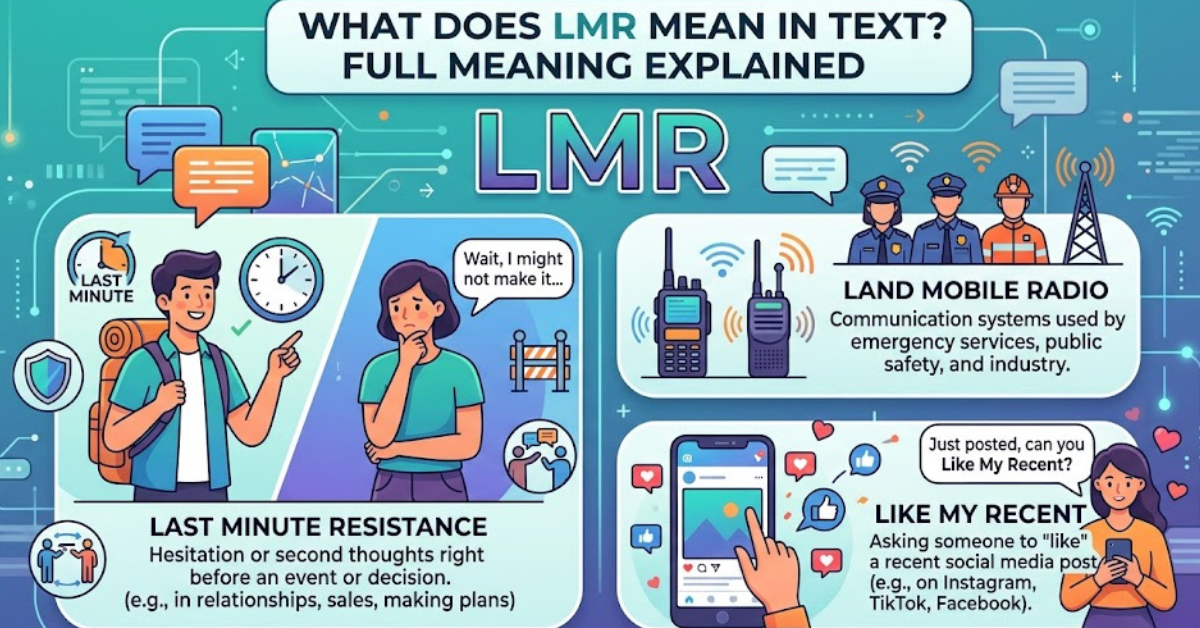
In most online conversations, LMR stands for “Like My Recent.”
So when someone says “LMR,” they are usually asking you to go to their social media profile (Instagram, TikTok, Snapchat, etc.) and like their most recent post.
This is why what does lmr mean in text often comes up in social media contexts—it’s mainly used for engagement boosting.
Why Do People Use LMR?
The internet runs on engagement. Likes, comments, and shares matter for visibility. That’s where LMR comes in.
People use LMR to:
- Increase likes on new posts
- Boost visibility on social media algorithms
- Get attention from friends or followers
- Grow personal accounts faster
For example, someone might post a story saying:
“LMR”
This is basically a short, informal request for interaction.
How LMR Is Used in Real Conversations
To understand what does lmr mean in text, it helps to see it in action.
Example 1: Instagram Story
User A: “LMR”
Meaning: “Please go like my recent post.”
Example 2: Direct Message
Friend: “Hey, LMR when you get time ”
Meaning: A casual reminder to engage with their latest post.
Example 3: Comment Section
“LMR and I’ll do the same for you”
Meaning: Engagement exchange between users.
These examples show how flexible the term is in everyday digital communication.
Where Did LMR Come From?
Internet slang like LMR didn’t appear randomly. It evolved from social media culture, especially platforms like Instagram and Snapchat where engagement matters.
As users looked for quicker ways to ask for likes, abbreviations like:
- LMR (Like My Recent)
- L4L (Like for Like)
- F4F (Follow for Follow)
became common shorthand.
So when you’re searching what does lmr mean in text, you’re really looking at part of a larger social media language trend.
Variations and Related Slang
To fully understand what does lmr mean in text, it helps to know similar acronyms:
- L4L (Like for Like): I’ll like your posts if you like mine
- F4F (Follow for Follow): Mutual following arrangement
- SFS (Shoutout for Shoutout): Promotion exchange
- PMO (Put Me On): Introduce me or share something
These terms all revolve around online growth and engagement.
Is LMR Always the Same Meaning?
Not always. While “Like My Recent” is the most common meaning, context matters.
In rare cases, LMR can also mean:
- Last Minute Revision (in academic settings)
- Leave Me Roaming (less common internet slang variation)
However, when people search what does lmr mean in text, they’re almost always referring to social media usage.
When Should You Use LMR?
LMR is informal slang, so it’s best used in casual settings only.
Good situations:
- Social media posts
- Chatting with friends
- Online engagement groups
Avoid using it in:
- Professional emails
- Formal conversations
- Academic writing
Using slang like LMR in the wrong place can make communication feel unprofessional.
Why LMR Is Popular on Social Media
The popularity of what does lmr mean in text searches reflects a bigger trend: people want fast growth online.
LMR works because:
- It’s short and easy to type
- It clearly communicates intent
- It encourages quick engagement
- It fits into fast-moving social platforms
In a world where attention spans are short, abbreviations like LMR thrive.
Practical Tips for Using LMR Effectively
If you plan to use LMR, keep these tips in mind:
- Don’t overuse it—too many requests can annoy followers
- Pair it with emojis for better engagement (e.g., “LMR ”)
- Use it shortly after posting new content
- Combine it with quality posts for better results
Remember, engagement works best when your content is actually interesting—not just the request itself.
Key Takeaways
- LMR = Like My Recent in most social media contexts
- It’s used to ask others to engage with your latest post
- It’s part of broader internet slang culture (like L4L, F4F)
- Best used in casual online communication
- Context always matters when interpreting slang
FAQs About What Does LMR Mean in Text
1. What does lmr mean in text on Instagram?
On Instagram, what does lmr mean in text usually refers to “Like My Recent,” meaning someone wants you to like their latest post.
2. Is LMR a polite way to ask for likes?
Yes, it’s a casual and widely accepted slang term, though it can sometimes feel a bit direct depending on context.
3. Can LMR mean something else?
Yes, but rarely. It can also mean “Last Minute Revision,” but on social media it almost always means “Like My Recent.”
4. Is using LMR considered spam?
Not usually, but excessive use can be seen as engagement chasing or spammy behavior.
5. Why do people search what does lmr mean in text?
Because slang evolves quickly, and many users encounter LMR in posts or chats without knowing its meaning.
6. Should I reply to LMR messages?
It’s optional. If you want to support the person, you can like their post; otherwise, you can ignore it.
Conclusion
Understanding what does lmr mean in text helps you navigate modern social media language with ease. At its core, LMR simply means “Like My Recent,” a quick request for engagement on platforms like Instagram and TikTok.
While it’s informal, it plays a big role in how users interact and grow online. Now that you know what it means and how it’s used, you’ll recognize it instantly the next time it pops up in your feed.
If you’re exploring more internet slang, keep an eye out—there’s always a new acronym trending somewhere online.
Leave a Reply