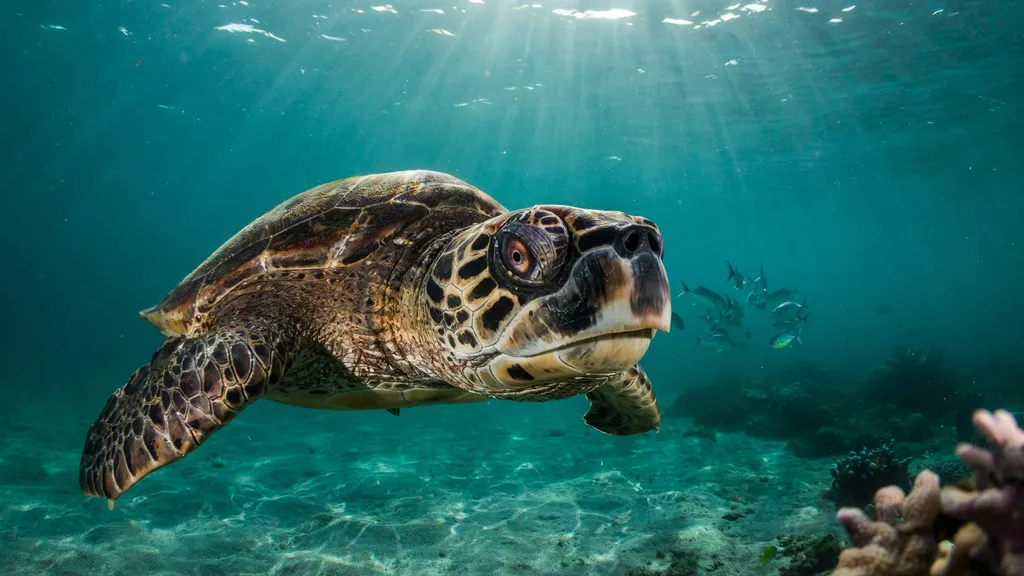
Have you ever looked closely at a sea turtle? If you get the chance to see a big, beautiful ocean swimmer, your eyes might go right to its shell. But there is another super cool part to look at. It is the Loggerhead Turtle Head! This big, chunky head is built like a tiny tank. It helps the turtle live a wild life in the deep blue sea.
Loggerhead turtles get their special name because their heads are so large and wide. They do not look like other fragile sea creatures. Their heads look strong, tough, and ready for action. When you watch one swim through the waves, you can tell it is a real survivor. Today, we are going to look right at this famous turtle face. We will see how every little part, from the nose to the strong jaw, helps the animal rule the ocean. Get your swim gear on and let us dive into the wonderful world of these ocean giants!
Why Is the Loggerhead Turtle Head So Big?
The loggerhead turtle head is huge for a very good reason. It has to hold giant, heavy muscles inside. These muscles connect right to the jaw. Think of the head like a toolbox. Inside that box are the best tools for the job. The turtle needs a strong bite to eat tough food. Without a big head, it could not carry such heavy jaw power.
When you compare the head to the rest of the body, it looks extra chunky. This size is a superpower in the wild. It lets the turtle crunch on hard things that other animals cannot touch. Nature gave this creature a custom-built helmet. It keeps the important parts safe while making dinner time easy. It is proof that being big and round can be a great way to stay alive in a busy ocean.
Meet the Super Strong Jaw
Let us talk about the bite! The jaw on a loggerhead turtle head is no joke. It is thick, hard, and shaped like a heavy hook. This powerful bone lets the turtle snap open shells like a nutcracker. They love to eat crabs, conchs, and clams. Those animals have hard houses, but the turtle does not mind at all.
With one big chomp, the shell breaks right open. The strong jaw muscles do all the hard work. It is like having a pair of heavy wire cutters built right into your face. This helps the turtle find plenty of food on the ocean floor. While other fish might go hungry, our turtle friend has the best tool for an easy meal. Crunching through hard shells is just another fun day at the office for these animals.
The Hard Beak and Sharp Edges
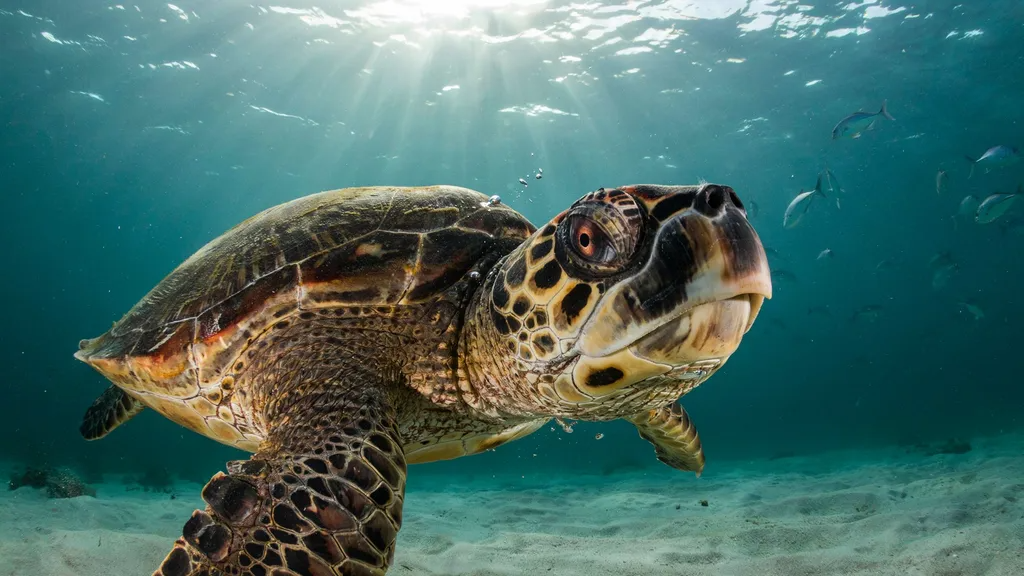
Right at the front of the loggerhead turtle head is a sharp, bony beak. This beak does not have soft lips. Instead, it is made of keratin. That is the same strong stuff your fingernails are made of, but way harder! The edges are sharp enough to slice through plants and animals.
The top part of the beak curves down like a bird of prey. This hook stops slippery food from getting away. When the turtle grabs a snack, the beak holds it tight. It acts like a second pair of hands right on the face. Between the sharp beak and the strong jaw, eating hard snacks is fast and simple. It is a neat design that has worked great for millions of years of ocean history.
How Do They Breathe Underwater?
Even though they live in the ocean, loggerhead turtles cannot breathe water like fish do. They need fresh air just like you! If you look at the top of the loggerhead turtle head, you will spot two small nostrils. These are called nares.
When the turtle swims up to the top of the water, it pokes just its nose out. It takes a fast, deep gulp of air. Then, special flaps close the nose tight so no salty water gets inside the lungs. It is a quick breath, and then the turtle dives right back down to the bottom. They can hold their breath for a long time while they look for food or take a little nap under a rock.
Amazing Eyes and Underwater Vision
The eyes on a loggerhead turtle head are placed on the sides. This gives the turtle a wide view of the world. They can see things coming from the left, the right, and even a bit behind them! This is super helpful when big hungry sharks are swimming around.
Water can be blurry, but turtle eyes adjust to see shapes and movement. A special clear eyelid, called a nictitating membrane, covers the eye like a pair of swim goggles. It keeps the salty water from stinging. When the turtle crawls up on a sandy beach to lay eggs, you might see big salty tears coming from the eyes. Do not worry, they are not sad! They are just washing the sand and extra salt out of their eyes.
Ears Hidden Under the Skin
You will not see big floppy ears on the side of a loggerhead turtle head. They do not need them! Instead, their ears are hidden under a smooth patch of skin called a tympanum.
Even though we cannot see the ear holes, these turtles have good hearing. They feel low vibrations in the water. If a boat motor rumbles nearby or a big wave crashes on a reef, the turtle feels the sound right through its head bones. This early warning system helps them swim away from danger before they even see it. It is a quiet way to listen to the ocean symphony!
The Brain Inside the Big Shell and Skull
Underneath that thick, bony skull on the loggerhead turtle head is a smart little brain. It is not as big as a human brain, but it knows exactly what to do. It remembers where the best feeding spots are. It remembers the long path home to the nesting beach, too.
The hard bone around the brain works like a bicycle helmet. If the turtle bumps into a sharp rock or a grumpy fish, the brain stays safe and cozy. Nature made sure this important command center is well-guarded. It lets the turtle make smart choices every single day in the wild blue sea.
Protecting the Neck and Head
The loggerhead turtle head does not pull all the way inside the shell like a box turtle can. Their neck is thick and strong, but it stays out in the open. To protect itself, the turtle uses its heavy flippers and tough skin.
The scales on the head are large and hard, acting like armor plates. If something tries to bite the face, the hard scales take the hit. It is a tough outer layer that keeps the soft tissue safe. When you look at those overlapping scales, you see a natural mosaic. Every scale adds another layer of safety for the animal.
Growing Up From Hatchling to Giant
When a baby loggerhead turtle hatches on the warm sand, its head looks a little too big for its tiny body! It looks cute and funny. As the little hatchling crawls to the ocean, that big head is already ready to snap at tiny bugs and floating bits of food.
As the years pass, the body grows long and wide, and the head grows right along with it. An adult head can be nearly ten inches wide! Watching them grow up shows how perfect their body plan is. That little baby head turns into a mighty adult tool that rules the waves.
Complete Detailing Table
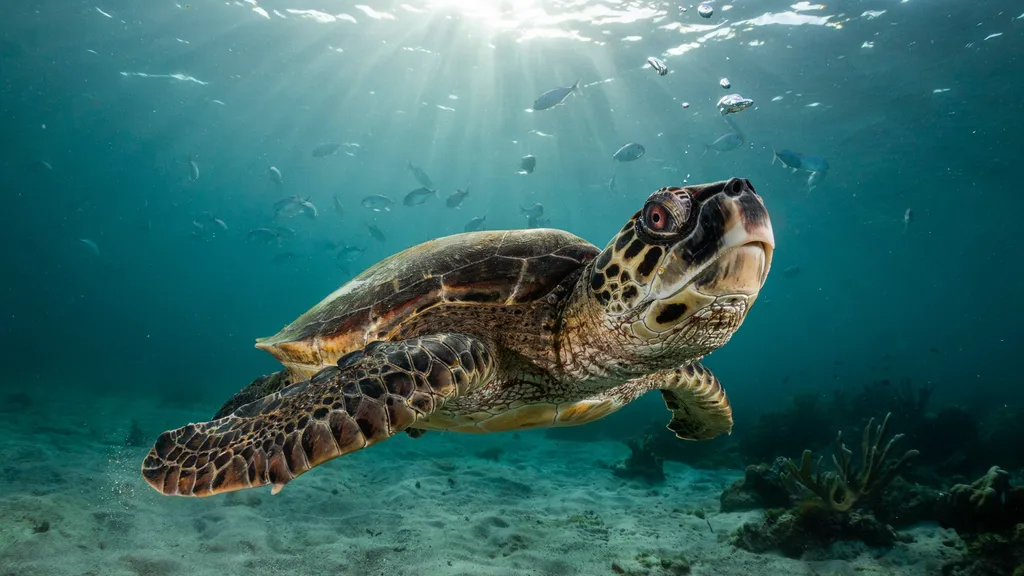
| Part of the Head | What It Looks Like | What It Does |
| Skull | Wide, heavy, and thick bone | Protects the brain like a helmet |
| Jaw | Massive and muscular | Cracks open hard shells and crabs |
| Beak | Sharp, curved, and hard | Holds onto slippery food |
| Nostrils | Two small holes on top | Takes in air when at the surface |
| Eyes | Placed on the sides | Spots food and danger all around |
| Ears | Hidden under skin patches | Feels vibrations and sounds in water |
| Scales | Tough, armor-like plates | Guards the face from sharp bumps |
Frequently Asked Questions
How big is a grown loggerhead turtle head?
An adult head can grow up to ten inches wide! It is one of the widest heads of any sea turtle in the whole ocean.
Can they bite hard with their mouths?
Yes! Their bite is super strong. They can crush thick clam shells and crab claws with one quick chomp of the jaw.
Do they cry real tears?
Not when they are sad. The tears wash away extra salt and sand so their eyes stay clean and healthy.
Can they pull their heads inside their shells?
No, they cannot hide their heads inside like pet pond turtles do. They rely on their hard scales and strong neck muscles instead.
What do they like to eat with those big jaws?
They love crunchy snacks like crabs, sea snails, and clams that live on the sandy ocean floor.
How long can they hold their breath underwater?
When they are resting, they can stay under the water for many minutes before they need to pop up for air.
Conclusion
The loggerhead turtle head is an amazing piece of ocean design. From the heavy crunching jaw to the bright side eyes, every single piece helps this wonderful creature thrive. Next time you visit the beach or watch a nature show, remember the mighty power hidden in that wide face. These gentle giants need our help to keep their ocean home clean and safe. You can help by keeping beaches clean and picking up trash. Let us protect these cool sea swimmers so they can chomp and swim for many years to come! What is your favorite thing about these ocean animals?
Leave a Reply