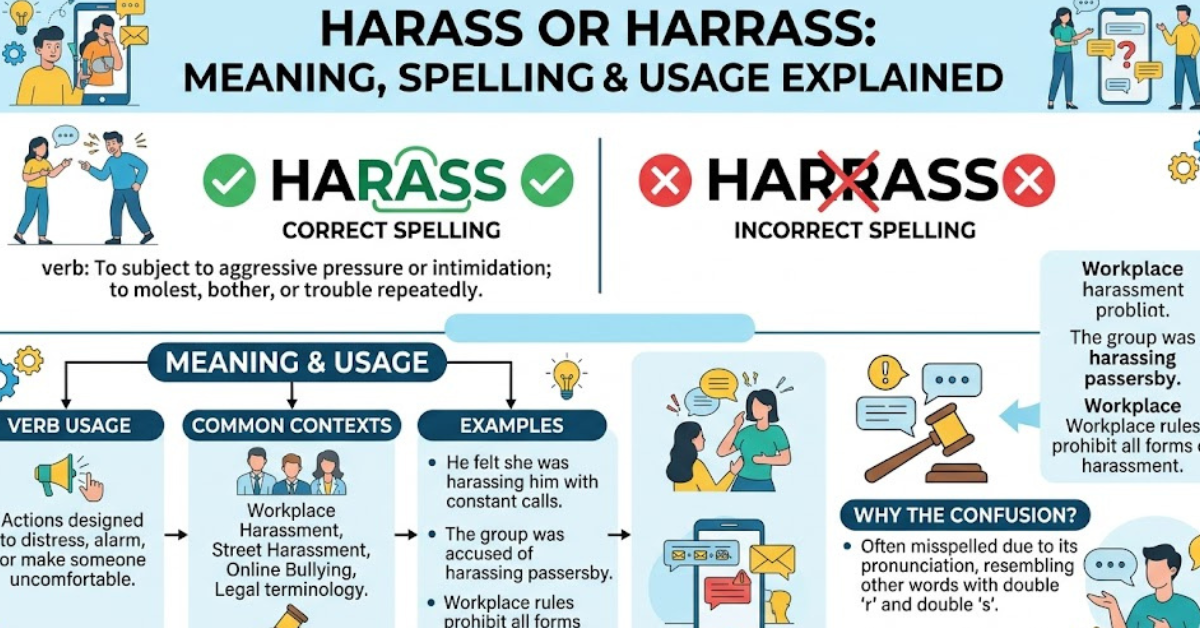
The confusion between harass or harrass is extremely common in English writing, especially online. Many people are unsure whether the correct spelling includes one “r” or two, and this often leads to mistakes in professional and casual communication.
In reality, the correct form is “harass”, and “harrass” is a frequent spelling error. Beyond spelling, the word also carries serious meaning related to unwanted behavior, making it important to understand both its usage and context clearly.
This article breaks down the correct spelling, meaning, real-world usage, and legal implications of harassment in simple, practical terms.
What Does “Harass” Mean?
The word harass means to repeatedly disturb, annoy, or subject someone to unwanted behavior. It can apply to many situations, from workplace issues to online interactions.
Common meanings include:
- Repeated verbal abuse or insults
- Unwanted attention or messages
- Intimidation or pressure tactics
- Persistent annoying behavior
In legal and social contexts, harassment is considered serious because it affects a person’s safety, comfort, and mental well-being.
Harass or Harrass: Correct Spelling Explained
One of the most searched grammar questions is whether to write harass or harrass.
The correct spelling:
- Harass (correct form)
The incorrect spelling:
- Harrass (common mistake)
Why the confusion happens:
- The pronunciation can sound like it has a double “r”
- Similar English words often double consonants (e.g., “embarrass”)
- Spelling habits from informal writing online
Tip: Remember that “harass” follows the standard English spelling pattern without doubling the “r.”
Types of Harassment Real-World Context
Understanding harassment goes beyond spelling. It appears in different forms across society.
1. Workplace Harassment
- Bullying by colleagues or supervisors
- Unfair treatment or intimidation
- Repeated offensive remarks
2. Online Harassment Cyber Harassment
- Threatening messages
- Social media bullying
- Fake accounts used to target individuals
3. Verbal Harassment
- Insults or degrading comments
- Repeated shouting or humiliation
4. Physical or Stalking Behavior
- Unwanted following or monitoring
- Invasion of personal space
- Repeated unwanted contact
Legal Perspective on Harassment
In many countries, harassment is treated as a legal issue when it becomes persistent or threatening.
It may include:
- Workplace discrimination cases
- Cybercrime laws (for online harassment)
- Protection orders in stalking cases
Authorities usually consider:
- Frequency of behavior
- Intent to harm or intimidate
- Impact on the victim
How to Respond to Harassment
If someone experiences harassment, there are practical steps they can take:
Steps to take:
- Document everything (messages, dates, incidents)
- Set clear boundaries when safe to do so
- Block or restrict contact online
- Report to authorities or platforms
- Seek support from trusted people or professionals
Common Grammar Mistakes Related to “Harass”
Many writers confuse harass with similar words or spellings.
Examples:
- harrass (incorrect)
- harras (incorrect)
- haras (incorrect)
- harass (correct)
FAQs About Harass or Harrass
1. What is the correct spelling: harass or harrass?
The correct spelling is harass with a single “r” in the middle.
2. Why do people write “harrass”?
It’s usually due to pronunciation confusion or influence from other double-consonant words.
3. What does harass mean in simple words?
It means to repeatedly bother, disturb, or pressure someone in an unwanted way.
4. Is harassment illegal?
Yes, in many cases harassment is illegal, especially when it involves threats, discrimination, or stalking.
5. What are examples of harassment?
Examples include bullying, unwanted messages, intimidation, and repeated offensive behavior.
Conclusion
The confusion between harass or harrass is common, but the correct spelling is clearly harass. Beyond grammar, the word carries serious meaning related to repeated unwanted behavior that can affect people emotionally, socially, and legally.
Understanding both the spelling and the context helps improve communication and ensures respectful use of language. If you’re writing or speaking professionally, always use the correct form and be mindful of the term’s impact.
Leave a Reply