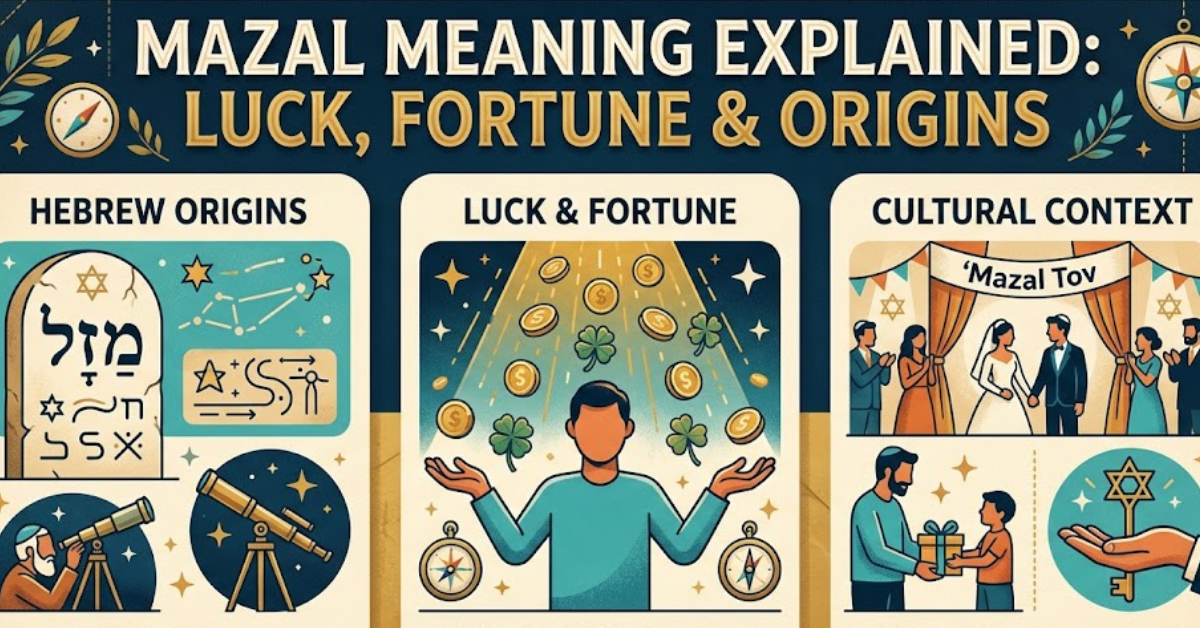
The phrase mazal meaning often comes up in conversations about Hebrew language, Jewish culture, and even astrology. At its core, “mazal” is a word that carries deep historical and spiritual significance, commonly translated as luck or fortune. But its meaning goes far beyond simple chance.
In this article, we’ll break down the mazal meaning, its linguistic roots, cultural usage, and how it connects to expressions like “mazal tov.” Whether you’re curious about Hebrew words or exploring cultural expressions, this guide will give you a clear and engaging understanding.
Mazal Meaning in Hebrew Language
In Hebrew, the word mazal (מזל) is commonly understood as:
- Luck
- Fortune
- Destiny or fate (in broader interpretation)
However, its original roots go deeper than modern usage suggests. In ancient Hebrew, “mazal” is linked to astrology and constellations, referring to the influence of celestial bodies on a person’s life.
Mazal and Its Astrological Roots
Historically, “mazal” was associated with:
- Zodiac signs
- Star constellations
- Cosmic influence on human destiny
This is why some interpretations connect mazal meaning with the idea that life events are influenced by the stars.
Mazal Meaning in Jewish Culture
In Jewish tradition, “mazal” is widely used in everyday language and celebrations. One of the most famous expressions is:
Mazal Tov – A Common Greeting
“Mazal tov” literally means:
- “Good luck” or
- “Good fortune”
But culturally, it is used to say:
- Congratulations on weddings
- Births
- Achievements
- Special milestones
Interestingly, in modern usage, “mazal tov” is less about wishing future luck and more about celebrating something that has already happened.
Mazal Meaning vs. Luck in English
While “mazal” is often translated as “luck,” the meaning is not identical.
Key differences include:
- Mazal: A mix of destiny, spiritual influence, and fortune
- Luck: Random chance without deeper meaning
- Fate (closest English concept): Pre-determined outcome or path
This makes mazal meaning more layered and philosophical than simple “luck.”
Cultural and Modern Usage of Mazal
Today, the word “mazal” is used in various ways:
Everyday Expressions
- Mazal tov (congratulations)
- She’yihyeh be’mazal (may it be with luck)
- B’mazal (with luck/fortunate circumstances)
Modern Interpretations
In modern contexts, people may use “mazal” to describe:
- Good fortune in life events
- Unexpected success
- Positive outcomes believed to be “meant to be”
Why Mazal Meaning Still Matters Today
Even in modern times, the concept of mazal continues to resonate because it touches on universal human ideas:
- Belief in destiny
- Hope for good fortune
- Celebration of life events
- Spiritual interpretation of success
Whether someone views it spiritually or culturally, mazal meaning continues to be a meaningful concept across generations.
FAQs About Mazal Meaning
1. What is the simple meaning of mazal?
Mazal generally means luck, fortune, or destiny in Hebrew.
2. What does mazal tov mean?
Mazal tov means “good fortune” and is used to say congratulations.
3. Is mazal related to astrology?
Yes, historically mazal is connected to constellations and zodiac signs in ancient Hebrew thought.
4. Is mazal the same as luck?
Not exactly. Mazal includes deeper ideas of fate and spiritual influence, while luck is more random.
5. How is mazal used today?
It is commonly used in expressions like “mazal tov” during celebrations.
Conclusion: Understanding the True Mazal Meaning
The mazal meaning goes far beyond the simple idea of luck. Rooted in Hebrew language and ancient traditions, it combines concepts of fortune, destiny, and even cosmic influence. From everyday greetings like “mazal tov” to deeper philosophical interpretations, mazal remains a powerful and widely used term.
If you’re interested in language, culture, or spiritual meanings, exploring words like mazal opens a fascinating window into how people understand fate and fortune across history.
Leave a Reply