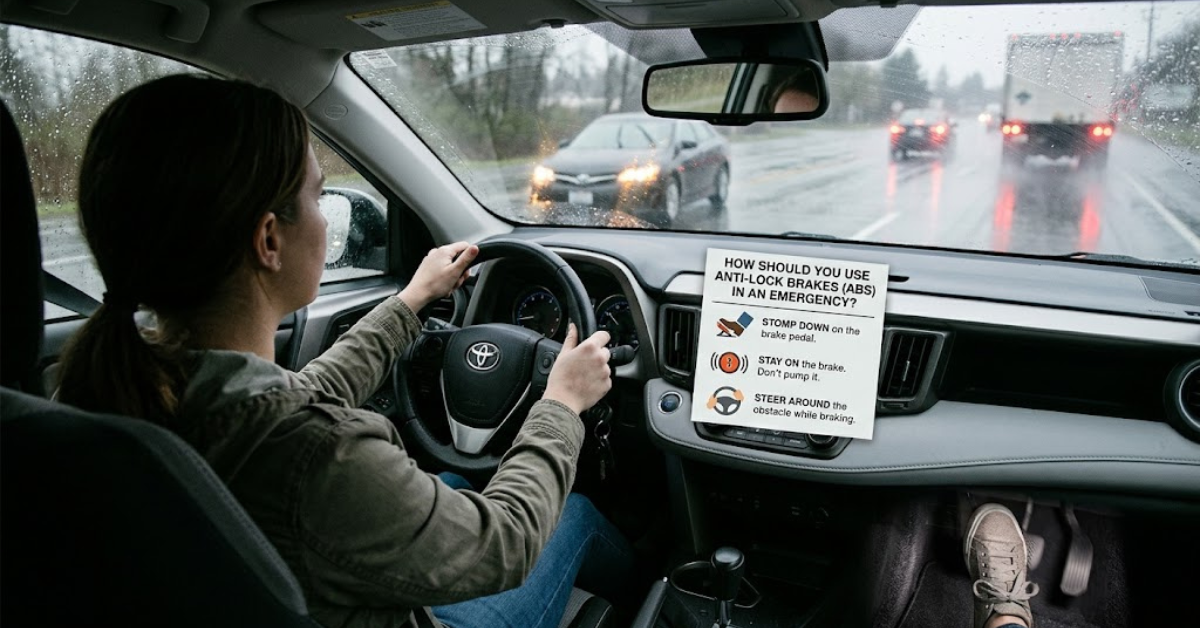
Imagine you’re driving on a rainy afternoon when a car suddenly pulls out in front of you. You have only seconds to react. In that moment, knowing how should you use anti-lock brakes when you need to stops in an emergency? can make the difference between a close call and a serious collision.
Many drivers have heard of anti-lock braking systems (ABS), but surprisingly few know how to use them correctly during a panic stop. This guide explains exactly how ABS works, the proper emergency braking technique, common mistakes to avoid, and practical safety tips that can help you stay in control when every second counts.
What Are Anti-Lock Brakes (ABS)?
Anti-lock Braking System (ABS) is a vehicle safety feature designed to prevent your wheels from locking during hard braking.
When wheels lock, your vehicle can skid, making it difficult—or impossible—to steer. ABS rapidly pumps the brakes hundreds of times per minute, allowing the tires to maintain traction with the road while helping you steer around obstacles.
Today, ABS is standard equipment on most passenger vehicles, SUVs, pickup trucks, and many motorcycles.
How ABS Works
The system includes:
- Wheel speed sensors
- Electronic control unit (ECU)
- Hydraulic control module
- Brake pressure valves
When sensors detect that a wheel is about to lock, the system automatically reduces and reapplies brake pressure multiple times every second.
The driver doesn’t need to pump the brake pedal—the vehicle does it automatically.
How Should You Use Anti-Lock Brakes When You Need to Stops in an Emergency?
The correct technique is surprisingly simple:
Press the Brake Pedal Firmly
When an emergency occurs:
- Push the brake pedal hard.
- Apply continuous, firm pressure.
- Do not release the pedal until the vehicle has slowed or stopped.
Many drivers instinctively ease off the brakes when they feel vibration, but this is exactly what you should avoid.
Do Not Pump the Brakes
One of the biggest myths carried over from older vehicles is pumping the brake pedal.
If our vehicle has ABS:
Don’t pump the brakes.
Instead:
Press firmly and keep steady pressure.
The ABS already pumps the brakes much faster and more effectively than a human ever could.
Keep Steering If Necessary
One of ABS’s greatest advantages is maintaining steering control.
If an obstacle is ahead:
- Brake hard.
- Continue steering around the hazard if possible.
- Keep looking where you want the vehicle to go—not at the obstacle.
Your eyes naturally guide your steering.
Expect Pedal Vibrations
Many first-time ABS users become alarmed when they feel:
- Pulsing
- Vibrations
- Grinding noises
- Rapid clicking sounds
These sensations are completely normal.
They indicate the anti-lock braking system is actively working.
Never release the brake pedal simply because it vibrates.
Why Anti-Lock Brakes Improve Emergency Safety
ABS offers several important safety benefits.
Better Steering Control
Without ABS:
- Wheels may lock.
- Vehicle may slide straight ahead.
With ABS:
- Tires continue rotating.
- Steering remains possible.
- Drivers have a better chance of avoiding collisions.
Reduced Skidding
ABS helps reduce uncontrolled skidding on:
- Wet roads
- Snow
- Ice
- Loose gravel
- Slippery pavement
Although stopping distance varies by surface, maintaining control is usually the greater safety advantage.
Increased Driver Confidence
Knowing the vehicle remains steerable during hard braking allows drivers to react more effectively in emergencies.
However, confidence should never replace cautious driving.
Common Mistakes Drivers Make During Emergency Stops
Even experienced drivers make errors under pressure.
Pumping the Brake Pedal
This is the most common mistake.
Older cars without ABS required pumping.
Modern vehicles with ABS do not.
Releasing the Brake Too Early
Some drivers feel the brake pedal shaking and assume something is wrong.
In reality, the vibration is proof that ABS is functioning correctly.
Maintain pressure until it’s safe.
Looking at the Obstacle
Drivers often stare directly at:
- Another vehicle
- Guardrail
- Tree
- Pedestrian
This is called target fixation.
Instead, focus on the escape path.
Your hands naturally follow your eyes.
Following Too Closely
ABS cannot overcome poor driving habits.
If you’re following another vehicle too closely, even perfect braking may not prevent a crash.
Maintain a safe following distance.
Does ABS Always Reduce Stopping Distance?
Not always.
This surprises many drivers.
On Dry Pavement
ABS often provides similar or slightly shorter stopping distances than locked-wheel braking while maintaining steering control.
On Wet Roads
ABS usually improves both stopping performance and vehicle control.
On Snow or Gravel
Stopping distances may actually become longer.
Why?
Locked wheels can sometimes build a wedge of snow or gravel in front of the tires.
ABS prevents this, but it also preserves steering ability—which is usually more valuable than the shorter stop.
How to Tell If Your Vehicle Has ABS
Most vehicles manufactured in recent decades include ABS.
Signs include:
- ABS warning light on the dashboard during startup
- Vehicle owner’s manual
- Manufacturer specifications
- VIN information from the dealership
If the ABS warning light stays illuminated while driving, the braking system should be inspected.
Standard brakes will usually continue working, but ABS may be disabled.
What Does ABS Feel Like?
During hard braking you may notice:
- Rapid brake pedal pulsation
- Buzzing sound
- Clicking noises
- Slight vibration through the steering wheel
These sensations are expected.
Continue pressing firmly on the brake pedal.
Emergency Braking on Different Road Conditions
Dry Roads
- Brake firmly.
- Maintain pressure.
- Steer if needed.
Wet Roads
Reduce speed before hazards whenever possible.
If emergency braking becomes necessary:
- Press firmly.
- Keep steering.
- Allow extra stopping distance.
Snow and Ice
Traction decreases significantly.
ABS helps maintain control, but physics still limits stopping ability.
Drive slower and increase following distance.
Gravel Roads
ABS allows steering, though stopping distance may increase slightly.
Remain calm and continue applying firm brake pressure.
How ABS Differs From Traditional Braking Systems
| Feature | ABS | Traditional Brakes |
| Prevents wheel lock | Yes | No |
| Steering during braking | Yes | Limited |
| Brake pumping required | No | Sometimes |
| Skid prevention | Better | Less effective |
| Electronic control | Yes | No |
Tips for Practicing Emergency Braking
The best time to learn ABS is before an actual emergency.
Practice in a safe, empty parking lot when conditions allow.
Try:
- Accelerate to a low speed.
- Brake firmly.
- Experience the pedal vibration.
- Practice steering while braking.
- Repeat until comfortable.
Never practice on busy roads.
Other Safety Features That Work With ABS
Modern vehicles often combine ABS with several advanced technologies.
These include:
- Electronic Stability Control (ESC)
- Traction Control System (TCS)
- Brake Assist
- Automatic Emergency Braking (AEB)
- Adaptive Cruise Control
Together, these systems improve vehicle stability and collision avoidance.
Key Takeaways
- Press the brake pedal firmly during an emergency.
- Never pump ABS brakes.
- Keep steady pressure until the vehicle stops.
- Continue steering around hazards if needed.
- Expect brake pedal vibrations—they’re normal.
- Maintain safe following distances to reduce emergency situations.
- Practice emergency braking in a controlled environment.
Frequently Asked Questions
Should I pump anti-lock brakes during an emergency?
No. Vehicles with ABS automatically pulse the brakes many times per second. Simply press the brake pedal firmly and maintain steady pressure.
Why does my brake pedal shake when ABS activates?
The vibration is normal. It indicates the anti-lock braking system is rapidly adjusting brake pressure to prevent wheel lock and maintain steering control.
Does ABS work on ice?
Yes, ABS works on icy roads by helping prevent wheel lock and allowing steering control. However, stopping distances are still much longer due to reduced traction.
Can I steer while using anti-lock brakes?
Yes. One of the primary advantages of ABS is that it allows you to continue steering while applying maximum braking force during an emergency.
Is ABS safer than regular brakes?
In most emergency situations, ABS provides better vehicle control because it helps prevent skidding and allows steering around obstacles. It is considered one of the most important vehicle safety technologies.
What happens if the ABS warning light stays on?
A continuously illuminated ABS warning light may indicate a malfunction in the anti-lock braking system. Your normal brakes typically still function, but the ABS feature may not be available until the issue is repaired.
Conclusion
Understanding how should you use anti-lock brakes when you need to stops in an emergency? is an essential part of safe driving. The correct approach is straightforward: press the brake pedal firmly, keep constant pressure, avoid pumping the brakes, and steer if necessary to avoid hazards.
While ABS cannot eliminate every risk or defy the laws of physics, it significantly improves your ability to maintain control during sudden stops. Taking the time to understand how your braking system works—and practicing proper emergency braking in a safe environment—can prepare you to react confidently when it matters most. Safe driving starts with knowledge, and applying these techniques could make a critical difference on the road.
Leave a Reply