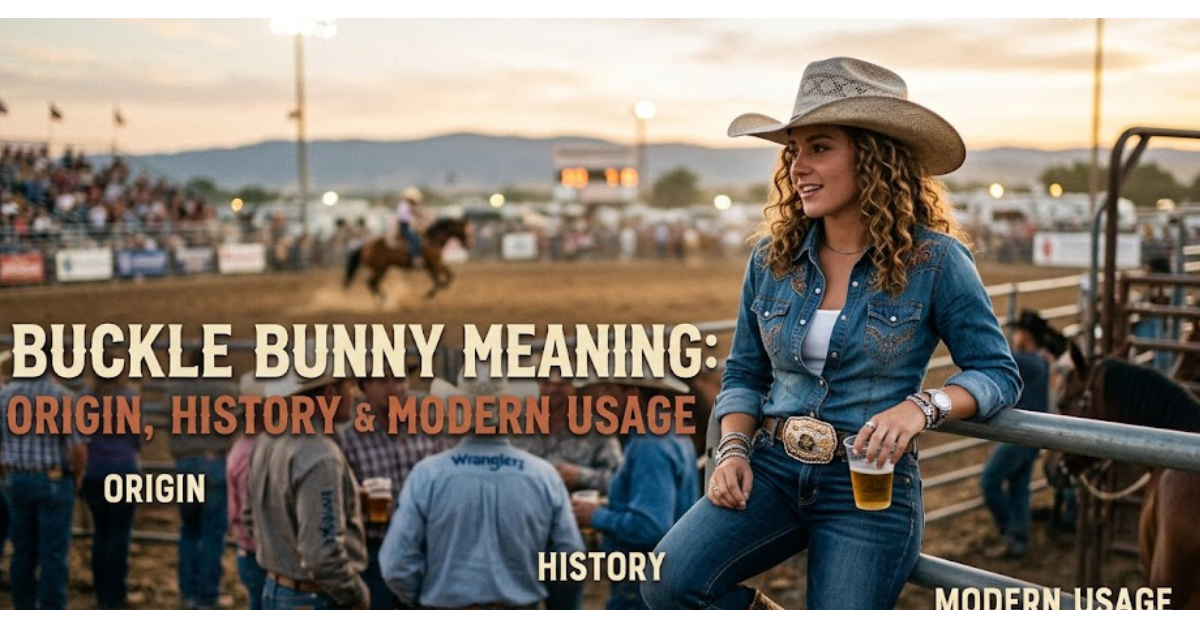
Have you ever heard someone use the phrase “buckle bunny” in a country music song, at a rodeo, or on social media and wondered what it actually means? While the expression has been around for decades, its meaning has evolved alongside Western culture and modern slang.
Understanding the buckle bunny meaning requires looking beyond the dictionary definition. The phrase carries cultural, historical, and sometimes controversial implications depending on how it’s used. In this guide, you’ll learn where the term came from, what it means today, how people use it in conversation, and why context matters.
What Does Buckle Bunny Mean?
A buckle bunny is a slang term commonly used in rodeo and Western culture to describe someone—traditionally a woman—who is primarily attracted to rodeo competitors, especially cowboys, because of their status, popularity, or lifestyle rather than forming genuine romantic relationships.
The phrase is often used humorously, but it can also carry a negative or dismissive tone depending on the speaker and situation.
In simple terms, a buckle bunny is someone perceived as chasing rodeo athletes in much the same way the phrase “groupie” refers to fans who pursue musicians or celebrities.
The Origin of the Term Buckle Bunny
The expression originated within the North American rodeo community.
Why “Buckle”?
In competitive rodeo events, winners often receive large, decorative championship belt buckles. These oversized buckles symbolize achievement and are highly respected among cowboys.
The “buckle” in the phrase refers to these prestigious awards.
Why “Bunny”?
The word “bunny” has appeared in several slang expressions over the years, often describing enthusiastic admirers or followers of a particular group.
When combined, “buckle bunny” became shorthand for someone believed to be attracted to successful rodeo competitors—particularly those wearing championship buckles.
Historical Background
The phrase gained popularity throughout the late 20th century as professional rodeo circuits expanded across the United States and Canada.
Rodeo events became more than sporting competitions—they evolved into social gatherings where fans, competitors, families, and visitors spent entire weekends together.
Within these communities, colorful slang naturally developed, including terms like:
- Buckle bunny
- Rodeo queen
- Bull rider
- Barrel racer
- Cowboy up
- Stock contractor
As Western culture became more visible through television, country music, and social media, the phrase reached audiences beyond rodeo circles.
Buckle Bunny Meaning in Modern Culture
Today, the expression has a broader meaning than it once did.
People may use it to describe someone who:
- Frequently attends rodeos mainly to meet cowboys
- Is fascinated by the cowboy lifestyle
- Dates multiple rodeo competitors
- Actively follows professional rodeo athletes online
- Is viewed as chasing status within the rodeo scene
However, not everyone who enjoys rodeos or Western fashion fits this description.
Many fans simply appreciate:
- Country music
- Ranch life
- Western fashion
- Horse riding
- Rodeo competitions
Using the label incorrectly can be unfair.
Is Buckle Bunny an Insult?
It depends entirely on the context.
Sometimes It’s Playful
Friends inside rodeo communities may jokingly use the phrase without intending offense.
For example:
“Looks like the buckle bunnies showed up before the bull riders.”
In these situations, the phrase functions as insider humor.
Sometimes It’s Critical
Others use the term to imply that someone is interested only in a cowboy’s fame, awards, or reputation rather than the individual.
Because of this implication, many people consider the label disrespectful or sexist.
Difference Between a Buckle Bunny and a Rodeo Fan
This distinction is important.
| Buckle Bunny | Rodeo Fan |
| Interested mainly in rodeo competitors | Interested in the sport itself |
| Focuses on athletes | Focuses on events and competition |
| Slang term with mixed connotations | Neutral description |
| Often associated with dating competitors | Simply enjoys rodeo culture |
Being passionate about rodeos does not automatically make someone a buckle bunny.
How the Term Appears on Social Media
Platforms like TikTok, Instagram, Facebook, and X (formerly Twitter) have helped popularize Western aesthetics.
You’ll often see captions such as:
- “Certified buckle bunny.”
- “Cowboy season is here.”
- “Living my rodeo life.”
- “Weekend at the rodeo.”
In some cases, users embrace the label humorously.
Others reject it because they feel it stereotypes women who genuinely enjoy Western culture.
Buckle Bunny in Country Music and Pop Culture
Country music, rodeo documentaries, Western television shows, and fashion influencers have all contributed to the popularity of the phrase.
Although it isn’t always mentioned directly in songs, the concept often appears in stories about:
- Rodeo romance
- Traveling cowboys
- Fairground relationships
- Western nightlife
- Competition culture
The term has become recognizable even among people who have never attended a rodeo.
Why the Phrase Can Be Controversial
Language evolves, and many slang expressions develop mixed reputations.
Critics argue that the term:
- Reinforces gender stereotypes
- Assumes someone’s motives without evidence
- Dismisses genuine interest in rodeo culture
- Can be used to shame women
Supporters, however, view it as harmless rodeo slang or self-deprecating humor when used among friends.
Ultimately, intent and context make a significant difference.
Examples of Buckle Bunny Used in Sentences
Here are a few examples that illustrate different contexts:
Playful:
“She laughed and called herself a buckle bunny after attending every rodeo this summer.”
Neutral:
“The documentary explained the buckle bunny meaning and its place in rodeo culture.”
Critical:
“Some competitors dislike being approached by people they consider buckle bunnies.”
These examples show how the phrase’s tone changes depending on the situation.
Common Misconceptions
It Means Anyone Who Likes Cowboys
False.
Many people enjoy country life, ranching, or Western fashion without fitting the stereotype.
It Only Refers to Young Women
Traditionally, yes, but modern conversations sometimes apply similar ideas more broadly. Even so, the term is still most commonly directed at women.
Every Rodeo Fan Is a Buckle Bunny
Not at all.
Millions of people attend rodeos because they enjoy the sport, family traditions, livestock competitions, or country entertainment.
When Should You Use the Term?
Because it can be interpreted differently, it’s wise to use the expression thoughtfully.
Consider these tips:
- Know your audience before using slang.
- Avoid labeling strangers.
- Recognize that some people find the term offensive.
- Use it humorously only when everyone involved is comfortable with it.
- If you’re writing professionally, explain the meaning rather than assuming readers know it.
Similar Slang Terms
Depending on the context, you may encounter related expressions:
- Groupie
- Rodeo groupie
- Cowboy chaser
- Country girl
- Rodeo enthusiast
- Western lifestyle fan
While these terms overlap in some ways, they aren’t perfect synonyms. Each has its own nuances and connotations.
Key Takeaways
- A buckle bunny is slang for someone perceived as pursuing rodeo competitors, often because of their status or lifestyle.
- The phrase originated in North American rodeo culture.
- “Buckle” refers to championship belt buckles awarded to winning competitors.
- The term can be humorous, neutral, or insulting depending on context.
- Enjoying rodeos or Western culture does not automatically make someone a buckle bunny.
- Thoughtful use of the term helps avoid reinforcing stereotypes or offending others.
Frequently Asked Questions
What is the literal buckle bunny meaning?
The buckle bunny meaning refers to a slang term for someone—traditionally a woman—who is believed to pursue rodeo cowboys because of their success, status, or lifestyle rather than genuine personal interest.
Is buckle bunny considered offensive?
It can be. Some people use it jokingly within rodeo communities, while others see it as a stereotype that unfairly judges women’s intentions.
Where did the phrase buckle bunny come from?
The term originated in North American rodeo culture. “Buckle” refers to the championship belt buckles won by successful competitors, while “bunny” is slang used to describe enthusiastic followers or admirers.
Is a buckle bunny the same as a rodeo fan?
No. A rodeo fan enjoys the sport, traditions, and events, while the slang term suggests someone is more interested in the competitors themselves.
Why do rodeo champions wear large belt buckles?
Championship belt buckles are traditional awards in rodeo. They symbolize victory, skill, and prestige, making them an iconic part of Western culture.
Can men be called buckle bunnies?
The term has historically referred to women, but similar slang is sometimes used more broadly in casual conversation. However, its traditional usage remains gender-specific.
Conclusion
The buckle bunny meaning goes beyond a simple slang definition. Rooted in rodeo traditions, the phrase reflects a unique part of Western culture while also highlighting how language can evolve over time. Depending on the context, it may be used humorously among friends or critically to describe perceived behavior, making tone and audience especially important.
Whether you’re exploring rodeo culture, decoding social media slang, or simply expanding your vocabulary, understanding the background and nuances of this expression helps you use it more accurately and respectfully. As with many colloquial terms, context is key—and knowing the story behind the words leads to better communication.
Leave a Reply