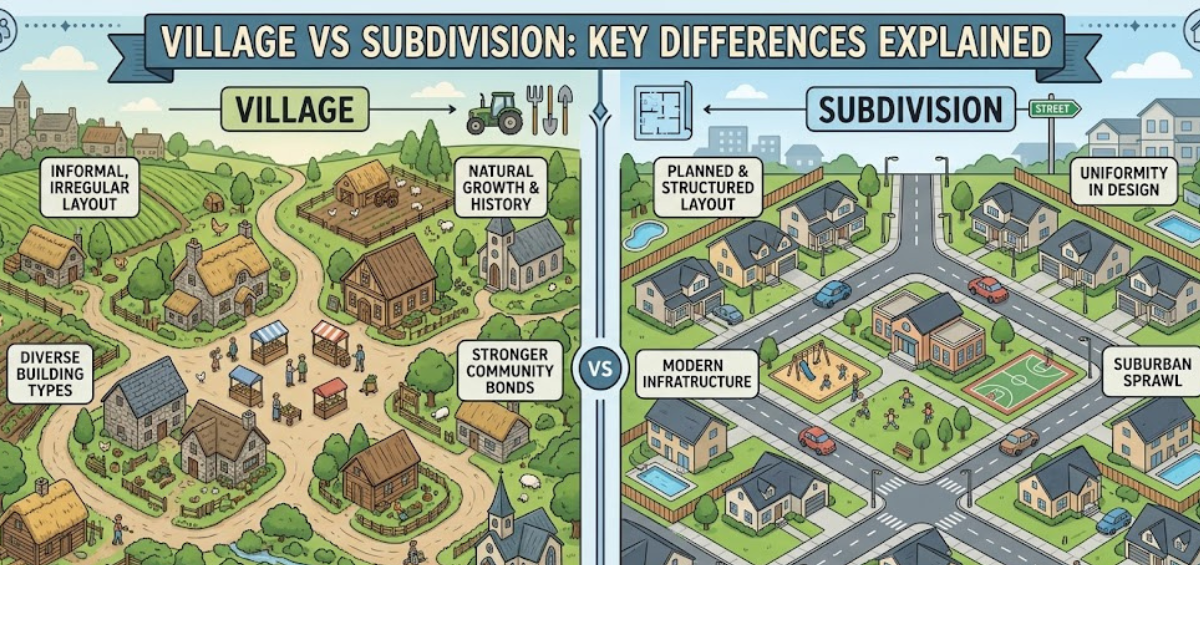
Have you ever wondered whether life is truly better in a quiet rural setting or a planned residential community? The debate around Village vs Subdivision continues to grow as people rethink where and how they want to live.
The Village vs Subdivision comparison is not just about location—it’s about lifestyle, cost, infrastructure, community, and long-term value. In this guide, you’ll learn the real differences between the two, including how they shape daily life, finances, and future opportunities.
By the end, you’ll have a clear understanding of which living environment fits your needs best.
What is a Village?
A village is a rural settlement where life is typically centered around agriculture, local trades, and close-knit community living. Villages often have simpler infrastructure and a slower pace of life.
Key characteristics of villages include:
- Strong community relationships
- Agriculture-based economy
- Limited but essential infrastructure
- Lower population density
- Natural surroundings and open spaces
In the context of Village vs Subdivision, villages represent tradition, simplicity, and a deeper connection to nature.
What is a Subdivision?
A subdivision is a planned residential development, usually found in urban or suburban areas. These communities are designed with structured layouts, modern amenities, and organized infrastructure.
Typical features include:
- Paved roads and utilities
- Planned housing plots or homes
- Access to schools, malls, and hospitals
- Security systems or gated communities
- Modern lifestyle conveniences
Unlike villages, subdivisions focus on convenience, accessibility, and structured living environments.
Village vs Subdivision: Key Differences
When comparing Village vs Subdivision, the differences become clear in terms of structure, lifestyle, and long-term opportunities.
1. Infrastructure
- Village: Basic roads, limited public services
- Subdivision: Modern roads, water systems, electricity, and internet access
2. Lifestyle
- Village: Slow-paced, traditional, community-driven
- Subdivision: Fast-paced, convenience-focused, privacy-oriented
3. Cost of Living
- Village: Generally lower living and housing costs
- Subdivision: Higher property prices and maintenance expenses
4. Employment Opportunities
- Village: Mostly agriculture and local businesses
- Subdivision: Access to diverse jobs in nearby cities or commercial zones
5. Space and Environment
- Village: Larger open land, natural surroundings
- Subdivision: Smaller plots, landscaped but structured environment
This Village vs Subdivision comparison shows that each has its own strengths depending on personal priorities.
Lifestyle Comparison: Peace vs Convenience
Lifestyle is often the deciding factor in the Village vs Subdivision debate.
Life in a Village
Village life is deeply rooted in tradition and simplicity. People often enjoy:
- Fresh air and natural surroundings
- Strong social bonds
- Less traffic and noise
- Self-sustained living through farming or local trade
However, it may lack quick access to modern facilities.
Life in a Subdivision
Subdivision living is built for comfort and accessibility:
- Easy access to healthcare, education, and shopping
- Better security systems
- Modern housing designs
- Social amenities like parks and gyms
The trade-off is often higher cost and less personal space compared to villages.
Cost, Infrastructure & Investment Value
Financial considerations play a major role in Village vs Subdivision decisions.
Villages:
- Lower land prices
- Affordable construction costs
- Slower property value appreciation in some areas
Subdivisions:
- Higher upfront cost
- Stronger resale value in growing urban regions
- Better rental income potential
From an investment perspective, subdivisions often offer more predictable appreciation, while villages may offer affordability and long-term land expansion potential.
Which is Better for You?
Choosing between a village and a subdivision depends on your lifestyle goals.
A village may suit you if you value:
- Peace and quiet
- Agriculture or nature-based living
- Lower cost of living
A subdivision may be better if you prefer:
- Modern amenities
- Urban convenience
- Strong infrastructure and connectivity
Ultimately, the Village vs Subdivision decision is personal—it depends on whether you prioritize simplicity or convenience.
Key Takeaways
- Villages offer affordability, nature, and traditional living
- Subdivisions provide modern infrastructure and convenience
- Lifestyle preference is the main deciding factor
- Investment potential is generally higher in subdivisions
- Both have unique advantages depending on personal needs
FAQs
1. What is the main difference between Village vs Subdivision?
The main difference is structure and lifestyle. Villages are rural and nature-based, while subdivisions are planned and urban-focused communities.
2. Is it cheaper to live in a village or subdivision?
Villages are generally cheaper in terms of housing and daily expenses, while subdivisions have higher property and maintenance costs.
3. Which is better for investment, Village vs Subdivision?
Subdivisions often provide better short- to mid-term investment returns due to infrastructure and demand growth.
4. Do subdivisions offer better facilities than villages?
Yes, subdivisions usually have better access to utilities, healthcare, schools, and commercial centers compared to villages.
5. Can villages become subdivisions in the future?
Yes, as cities expand, some villages are developed into planned subdivisions or urban communities.
6. Which is more peaceful in Village vs Subdivision?
Villages are generally more peaceful due to lower population density and minimal traffic or industrial activity.
Conclusion
The Village vs Subdivision comparison highlights two very different ways of life—one rooted in tradition and nature, the other in structure and modern convenience. Both offer meaningful advantages depending on your personal and financial priorities.
Whether you prefer the calm simplicity of village living or the organized comfort of a subdivision, the right choice comes down to your long-term lifestyle goals. Explore your options carefully, and choose the environment that truly fits your vision for the future.
Leave a Reply