Have you ever paused while writing and wondered whether to use realise or realize? You’re not alone. This spelling question is one of the most common sources of confusion for English speakers and writers worldwide.
The good news is that both spellings are correct. The choice between realise or realize depends largely on the variety of English you’re using and the style guide you’re following. In this article, we’ll explore the difference, explain when each spelling is appropriate, and help you confidently decide which version to use in your writing.
Is It Realise or Realize?
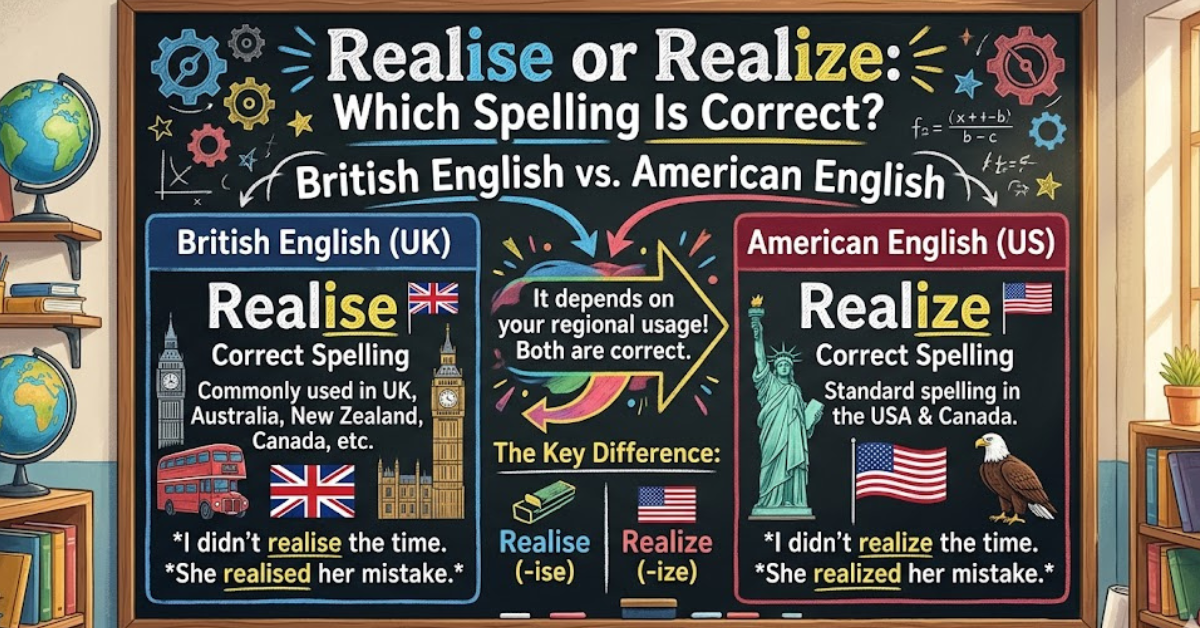
The short answer is: both “realise” and “realize” are correct spellings.
However, their usage varies according to regional English conventions:
- Realize is the standard spelling in American English.
- Realise is commonly used in British English, Australian English, and other Commonwealth countries.
For example:
- American English: I didn’t realize how late it was.
- British English: I didn’t realise how late it was.
Both sentences have the same meaning. The difference is purely spelling.
Understanding the Origin of Realise and Realize
Many people assume that realize is an American invention, but the history is more interesting.
The -ize ending actually has roots in ancient Greek through Latin and French. Historically, many British publishers used -ize spellings long before American English became standardized.
In fact, prestigious British institutions such as the Oxford University Press still prefer realize rather than realise.
This means that:
- Realize is correct in both American and some forms of British English.
- Realise is also accepted and widely used in modern British English.
Realise vs Realize: Key Differences
H3: Regional Usage
The primary distinction between realise and realize is geographical.
| Region | Preferred Spelling |
| United States | Realize |
| Canada | Usually Realize |
| United Kingdom | Realise (more common) |
| Australia | Realise |
| New Zealand | Realise |
| Oxford Style | Realize |
H3: Meaning
There is no difference in meaning between the two spellings.
Both words mean:
- To become aware of something
- To understand a fact or situation
- To achieve or bring something into reality
Examples:
- She realized she had forgotten her keys.
- She realised she had forgotten her keys.
The meaning remains identical.
Why Does British English Use Realise?
British English often uses -ise endings in words such as:
- Realise
- Organise
- Recognise
- Apologise
These spellings became popular through publishing traditions and educational standards across the UK and Commonwealth countries.
However, not every word ending in -ise can be converted to -ize, which is why consistency matters.
Why Does American English Prefer Realize?
American English generally favors -ize spellings.
You’ll commonly see:
- Realize
- Organize
- Recognize
- Analyze
American dictionaries, including Merriam-Webster and American style guides, consistently recommend the -ize form.
If you’re writing for a U.S. audience, realize is almost always the preferred choice.
Which Spelling Is More Common Online?
Search trends show that realize appears more frequently across the internet. This is largely because:
- The United States has a large English-speaking population.
- Many international businesses use American English.
- Global digital content often follows American spelling conventions.
However, realise remains extremely common in the UK, Australia, South Africa, and other English-speaking regions.
Realise or Realize in Academic Writing
H3: Follow Your Style Guide
In academic and professional writing, consistency is more important than choosing one spelling over the other.
Common recommendations include:
- APA Style: Realize
- Chicago Manual of Style: Realize
- Oxford Style: Realize
- Many UK Universities: Either, depending on institutional guidelines
Always check the required style guide before submitting formal work.
Common Examples of Realise and Realize
Here are some examples showing how both spellings are used:
British English Examples
- I didn’t realise the meeting started at noon.
- They realised their mistake too late.
- We finally realised the importance of planning ahead.
American English Examples
- I didn’t realize the meeting started at noon.
- They realized their mistake too late.
- We finally realized the importance of planning ahead.
Notice that only the spelling changes.
Similar Words That Follow the Same Pattern
The realise vs realize debate applies to many other English words.
British English Forms
- Organise
- Recognise
- Civilise
- Apologise
American English Forms
- Organize
- Recognize
- Civilize
- Apologize
Understanding this pattern can help you maintain consistency across your writing.
Tips for Choosing the Right Spelling
If you’re unsure whether to use realise or realize, follow these simple guidelines:
Use “Realize” If:
- You’re writing for an American audience.
- You’re following APA or Chicago style.
- Your company uses American English.
Use “Realise” If:
- You’re writing for a British audience.
- You’re following British publishing standards.
- Your school or employer uses British English conventions.
Most Important Rule
Choose one spelling style and use it consistently throughout your document.
Mixing British and American spellings can make writing appear unprofessional.
Common Mistakes to Avoid
Many writers make these errors:
Mixing Styles
Incorrect:
- I realised my error and then organized my notes.
Correct:
- I realised my error and then organised my notes.
- I realized my error and then organized my notes.
Assuming One Form Is Wrong
Both spellings are legitimate and accepted by major dictionaries.
The key is using the version that matches your audience.
FAQs
Is it realise or realize?
Both are correct. Realize is preferred in American English, while realise is more common in British English.
Is realize a British spelling?
Yes. Although less common than realise in modern British usage, many British publishers, including Oxford University Press, use realize.
Why do Americans use realize?
American English generally favors -ize endings in words such as realize, organize, and recognize.
Is realise incorrect?
No. Realise is a standard and accepted spelling in British English and many Commonwealth countries.
Which spelling should I use for SEO?
Use the spelling that matches your target audience. For global audiences, realize often receives higher search volume, but realise can perform better for UK-focused content.
Are realize and realise pronounced differently?
No. Both words are pronounced exactly the same way.
Can I use both spellings in one document?
It’s best not to. Choose either British or American English and remain consistent throughout.
Conclusion
When it comes to realise or realize, the answer is simpler than many people think: both spellings are correct. The difference lies in regional preferences rather than meaning or grammar. Realize dominates in American English and many academic style guides, while realise remains the preferred form in much of the United Kingdom and other Commonwealth nations.
The most important thing is consistency. Once you’ve chosen a spelling style, stick with it throughout your writing. Whether you use realise or realize, your readers will understand exactly what you mean.
For more language guides, spelling tips, and grammar explanations, explore related articles and continue improving your writing confidence.
Leave a Reply