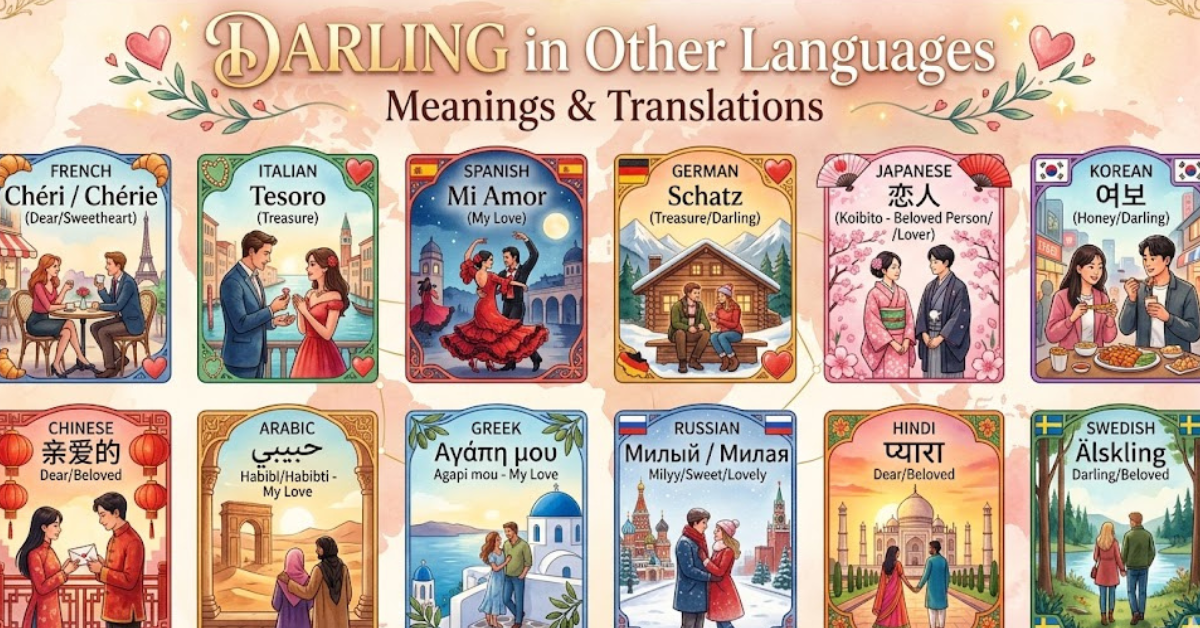
Have you ever wondered how people say darling in other languages when expressing love, affection, or deep emotional connection? The word “darling” is more than just a term of endearment—it carries warmth, intimacy, and cultural meaning that changes beautifully across languages.
In this guide, we’ll explore darling in other languages, how it’s used in everyday speech, and what makes each version special. From romantic European expressions to heartfelt Asian and Middle Eastern terms, you’ll discover how love is spoken around the world.
What Does “Darling” Really Mean Across Cultures?
The word “darling” is generally used to express affection toward a loved one—romantic partners, close friends, or even children. However, when translated into darling in other languages, the meaning can shift slightly depending on cultural tone.
In some languages, it feels romantic. In others, it sounds more like “sweetheart,” “beloved,” or “dear.”
Common emotional meanings include:
- Love and romance
- Deep affection
- Warm familiarity
- Protective care
- Emotional closeness
Darling in Other Languages: Popular Translations
Here’s how people say darling in other languages around the world:
European Languages
- French: Mon chéri (male) / Ma chérie (female)
- Spanish: Cariño, mi amor
- Italian: Tesoro (treasure), amore mio
- German: Schatz (treasure)
- Portuguese: Querido / Querida
In Europe, many terms translate literally to “treasure” or “my love,” showing how valuable a loved one is considered.
Asian Languages
- Hindi: Jaan (life), Pyaar (love)
- Urdu: Jaan-e-man (beloved of my life)
- Chinese (Mandarin): Bǎobèi (宝贝) meaning “baby” or “precious”
- Japanese: Anata (you, used affectionately in context)
- Korean: Jagiya (자기야) meaning “honey” or “darling”
Asian languages often use words meaning “life,” “precious,” or “baby” to express deep affection.
Middle Eastern & African Languages
- Arabic: Habibi (male) / Habibti (female) meaning “my beloved”
- Turkish: Sevgilim (my love)
- Swahili: Mpenzi (lover/darling)
These expressions are often deeply poetic, emphasizing emotional intensity and devotion.
English Variations Around the World
Even within English-speaking cultures, “darling” changes tone:
- “Honey” (USA/Canada)
- “Love” (UK, Australia)
- “Babe” (informal romantic usage)
- “Sweetheart” (classic affectionate term)
Cultural Differences in Using “Darling”
Understanding darling in other languages also means understanding when and how it is used.
Formal vs Informal Usage
- In French and German, it may sound formal or poetic.
- In English or Spanish slang, it can be casual or playful.
Romantic vs Family Context
- Arabic and Urdu often reserve terms for romantic partners.
- Chinese and Hindi may use affectionate terms for children or close family.
Emotional Intensity
Some languages express stronger emotional attachment than others, even when the meaning seems similar.
Why Learning “Darling in Other Languages” Matters
Knowing how to say darling in other languages isn’t just fun—it can help you:
- Connect emotionally with people from different cultures
- Improve language learning and communication
- Add warmth to travel experiences
- Understand global romance expressions in media and music
Quick List: Darling Translations at a Glance
- French – Ma chérie / Mon chéri
- Spanish – Mi amor / Cariño
- German – Schatz
- Italian – Tesoro
- Arabic – Habibi / Habibti
- Hindi – Jaan
- Chinese – Bǎobèi
- Japanese – Anata
- Korean – Jagiya
- Turkish – Sevgilim
FAQs About Darling in Other Languages
1. What is the most common way to say darling in other languages?
The most common translations include mi amor (Spanish), ma chérie (French), and habibi (Arabic), depending on the region.
2. Is “darling” used the same way in every language?
No. While the meaning is similar, cultural usage varies—some languages use it romantically, others more casually or familiarly.
3. What is the most romantic version of darling?
Many consider habibi/habibti (Arabic) and mon chéri/ma chérie (French) among the most romantic expressions.
4. Can I use these words with friends?
Yes, but it depends on the language. For example, “babe” in English is casual, while “habibi” is usually romantic.
5. Why do many languages use “treasure” for darling?
Because “treasure” symbolizes value and emotional importance, making it a powerful metaphor for loved ones.
Conclusion
Exploring darling in other languages shows just how beautifully humans express love across cultures. Whether it’s habibi, mi amor, schatz, or jaan, each word carries its own emotional depth and cultural flavor.
If you’re learning a new language or simply want to connect more deeply with people around the world, these affectionate terms are a great place to start. Try using them in conversation—you might be surprised how far a simple word of love can go.
Leave a Reply