Have you ever paused while writing and wondered whether it’s “passtime” or “pastime”? You’re not alone—this is one of the most common spelling confusions in English.
The phrase Passtime or Pastime often shows up in searches because many people are unsure which version is correct and why. In reality, only one of these spellings is accepted in standard English, and the difference matters more than you might think. In this article, you’ll learn the correct spelling, the meaning behind the word, common mistakes, and how to use it confidently in writing and conversation.
Passtime or Pastime: Correct Spelling and Meaning
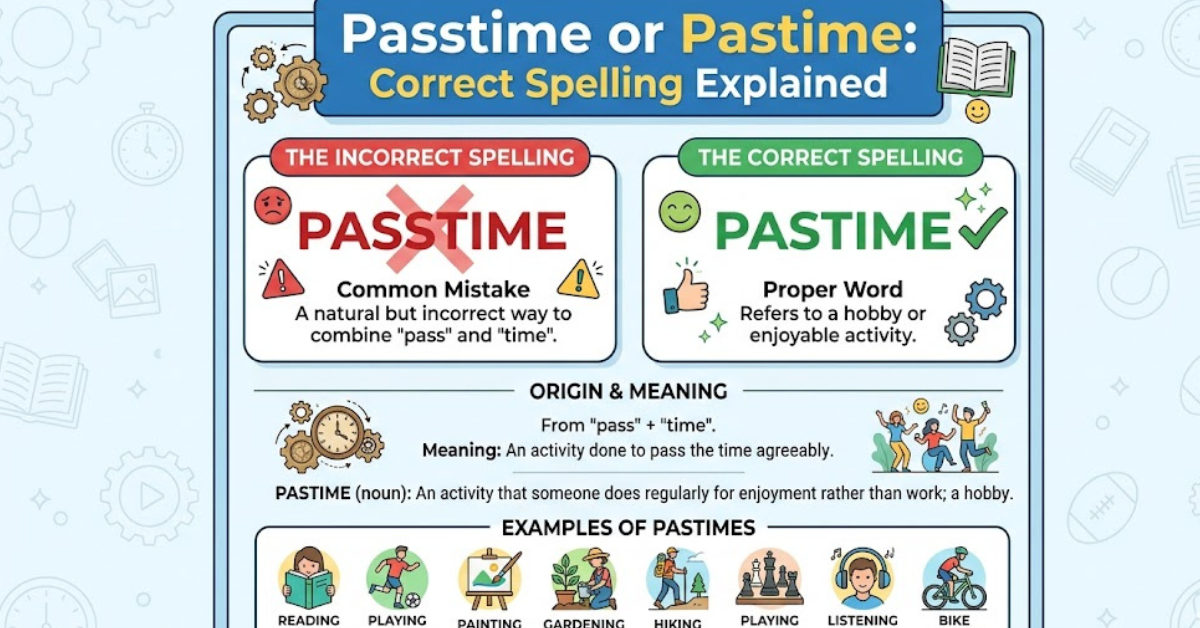
The correct form is “pastime,” while “passtime” is a common misspelling.
The word “pastime” refers to an activity done for enjoyment during leisure time. It combines “pass” and “time,” but over centuries it evolved into a single standardized word.
When people search Passtime or Pastime, they are usually trying to confirm spelling or understand whether both forms are acceptable. Only “pastime” is recognized in dictionaries like Merriam-Webster and Oxford English Dictionary.
Why “Passtime” Is Incorrect
The spelling “passtime” likely comes from the assumption that doubling the “s” matches pronunciation. However, English spelling rules do not follow phonetics consistently.
Common reasons for the mistake:
- Mishearing the word in conversation
- Overgeneralizing spelling rules
- Typing errors or autocorrect suggestions
In all formal writing, “passtime” should be avoided.
Meaning of Pastime and Its Usage in English
To fully understand Passtime or Pastime, it helps to explore what the correct word actually means.
A pastime is any activity done for relaxation, enjoyment, or entertainment rather than work or obligation.
Examples of Pastimes
People around the world enjoy different types of pastimes, such as:
- Reading books or novels
- Playing sports like cricket or football
- Gardening or painting
- Watching movies or listening to music
In modern language usage, pastime is often associated with hobbies and leisure activities that help people unwind.
When people mistakenly write Passtime or Pastime, they are usually referring to this concept of leisure activities.
Common Mistakes with Passtime or Pastime in Writing
Many learners and even native speakers confuse Passtime or Pastime in everyday writing.
Frequent Errors Include:
- Using “passtime” in academic essays
- Misspelling in social media captions
- Incorrect autocorrect suggestions on smartphones
How to Avoid the Mistake
Here are simple ways to ensure correct usage:
- Remember: only one “s” is needed
- Think of “past time” (something that helps time pass)
- Use spell-check tools when writing formally
By practicing these habits, you can avoid confusion between Passtime or Pastime in the future.
Etymology and Language Insight
The word “pastime” dates back to Middle English, originally formed from the idea of something that makes time pass pleasantly.
Over time, English simplified the structure into one word, which is why “passtime” never became standard.
This evolution shows how language naturally changes for ease of use. When analyzing Passtime or Pastime, it becomes clear that the correct form has historical and linguistic backing.
Practical Tips for Remembering the Correct Form
If you still struggle with Passtime or Pastime, these tips can help:
- Break it into “past + time”
- Associate it with leisure (“passing time happily”)
- Practice writing it in sentences daily
- Use flashcards if you’re a language learner
Small memory tricks like these make spelling much easier over time.
Key Takeaways
- The correct spelling is pastime, not “passtime”
- It refers to leisure activities and hobbies
- The mistake comes from pronunciation and typing habits
- Understanding word origin helps prevent confusion
FAQs about Passtime or Pastime
1. What is correct: Passtime or Pastime?
The correct spelling is pastime. “Passtime” is incorrect and not recognized in standard English dictionaries.
2. Why do people write Passtime or Pastime incorrectly?
Most confusion comes from pronunciation and assumptions about spelling patterns in English, leading to the extra “s.”
3. What does pastime mean in simple words?
A pastime is any activity you enjoy doing in your free time, such as hobbies or entertainment.
4. Is passtime ever used in formal writing?
No, “passtime” should not be used in formal or academic writing. Only “pastime” is correct.
5. How can I remember the correct spelling of Passtime or Pastime?
Think of it as “passing time”—this mental link helps you remember the correct form is “pastime.”
6. Is pastime a modern word?
Yes, it is still widely used today, especially when talking about hobbies and leisure activities.
Conclusion
Understanding Passtime or Pastime is simple once you know the rule: only “pastime” is correct. Despite being a common spelling mistake, it’s easy to fix with a little practice and awareness.
Whether you’re writing casually or professionally, using the correct form improves clarity and credibility. Keep the meaning in mind—something that helps you enjoy and pass your time—and you’ll never confuse it again.
If you’re interested in improving your English further, exploring common spelling confusions like this is a great next step.
Leave a Reply