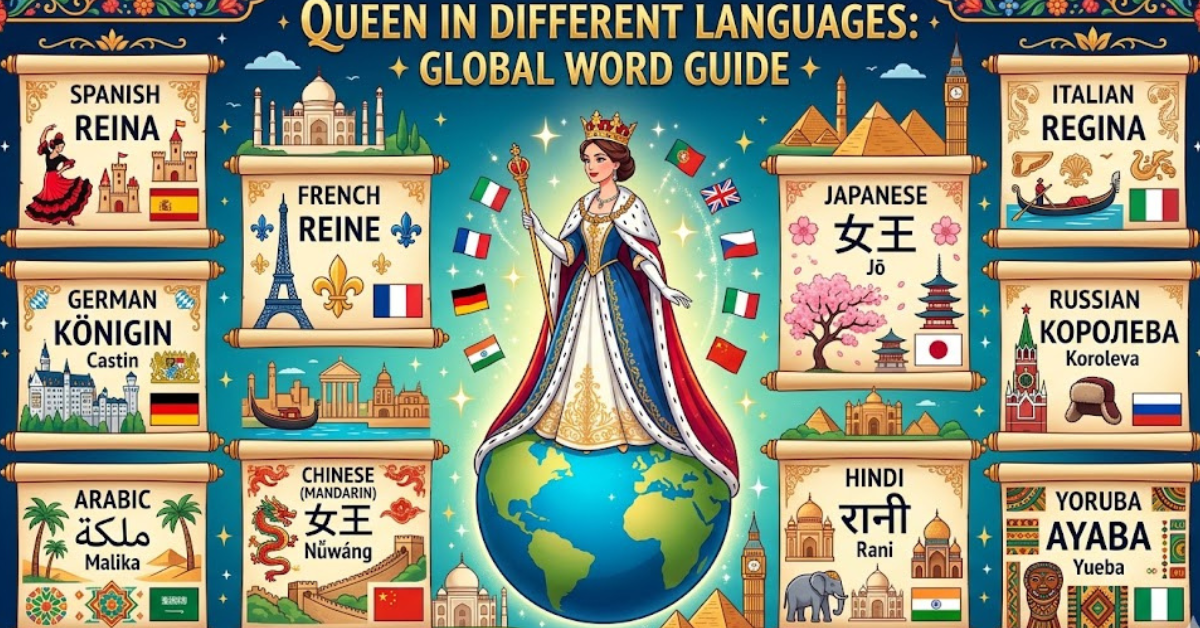
The phrase queen in different languages opens a fascinating window into how cultures express royalty, power, and femininity through words. While the idea of a queen is universal—representing leadership, dignity, and heritage—the way each language names her is beautifully unique.
In this guide, we’ll explore how the word queen is translated across major world languages, along with pronunciation hints, cultural context, and linguistic insights. Whether you’re a language learner, writer, or just curious, this breakdown makes it simple and engaging.
What Does “Queen” Mean in Different Languages?
At its core, the word “queen” refers to a female monarch or the wife of a king. However, when you explore queen in different languages, you’ll notice variations that reflect cultural history and linguistic structure.
Some languages distinguish between:
- A ruling queen (queen regnant)
- A queen by marriage (queen consort)
Others use a single word that covers both meanings.
Queen in Different Languages Global Translations
Here’s a clear and easy reference list of how “queen” is expressed around the world:
European Languages
- Spanish: Reina
- French: Reine
- German: Königin
- Italian: Regina
- Portuguese: Rainha
- Russian: Королева (Koroleva)
- Dutch: Koningin
- Greek: Βασίλισσα (Vasilissa)
Asian Languages
- Hindi: रानी (Rani)
- Urdu: ملکہ (Malka / Malika)
- Chinese (Simplified): 女王 (Nǚwáng)
- Japanese: 女王 (Joō)
- Korean: 여왕 (Yeowang)
- Thai: ราชินี (Rachini)
Middle Eastern & African Languages
- Arabic: ملكة (Malika)
- Hebrew: מלכה (Malka)
- Swahili: Malkia
Other Common Languages
- Turkish: Kraliçe
- Indonesian: Ratu
- Filipino (Tagalog): Reyna
Cultural Meaning Behind “Queen in Different Languages”
The concept of a queen is not just linguistic—it’s deeply cultural.
In many societies:
- The queen symbolizes power and authority
- She represents tradition and continuity
- In modern usage, “queen” can also mean strength, confidence, and respect for women
For example:
- In Hindi and Urdu cultures, Rani is often used in folklore and history.
- In European history, Reine or Reina often appears in royal dynasties.
- In East Asia, characters like 女王 (queen) carry both literal and symbolic meanings.
Pronunciation Tips for “Queen” Translations
Understanding queen in different languages is easier when you know how to pronounce them:
- Reina (Spanish): RAY-nah
- Reine (French): ren
- Königin (German): KUR-ni-gin
- Rani (Hindi): RAA-nee
- Malika (Arabic/Urdu): MA-li-ka
- Yeowang (Korean): YEO-wang
These small pronunciation differences show how languages shape identity and sound.
Why Learning “Queen in Different Languages” Matters
Studying words like queen across languages helps you:
- Improve multilingual vocabulary
- Understand cultural diversity
- Strengthen language learning skills
- Appreciate global history and monarchy systems
It’s also popular in:
- Language education
- Translation studies
- Cultural research
FAQs About Queen in Different Languages
1. What is the most common word for queen globally?
“Reina,” “Reine,” and “Rani” are among the most widely recognized translations depending on language families.
2. Is the word “queen” the same in all languages?
No, each language has its own version based on historical and linguistic evolution.
3. What is queen in Arabic and Urdu?
In Arabic it is ملكة (Malika) and in Urdu it is also ملکہ (Malka/Malika).
4. Does every language distinguish between queen consort and queen regnant?
Not all languages make a clear distinction; some use one word for both roles.
5. What does “queen” symbolize culturally?
It often symbolizes leadership, dignity, power, and feminine strength across cultures.
Conclusion
Exploring queen in different languages reveals more than just vocabulary—it uncovers how societies view royalty, gender, and power. From Reina in Spanish to Malika in Arabic and Rani in Hindi, each term carries its own cultural depth and historical meaning.
If you enjoy language exploration, keep diving into multilingual words like this—you’ll discover how beautifully connected human communication really is.
Leave a Reply