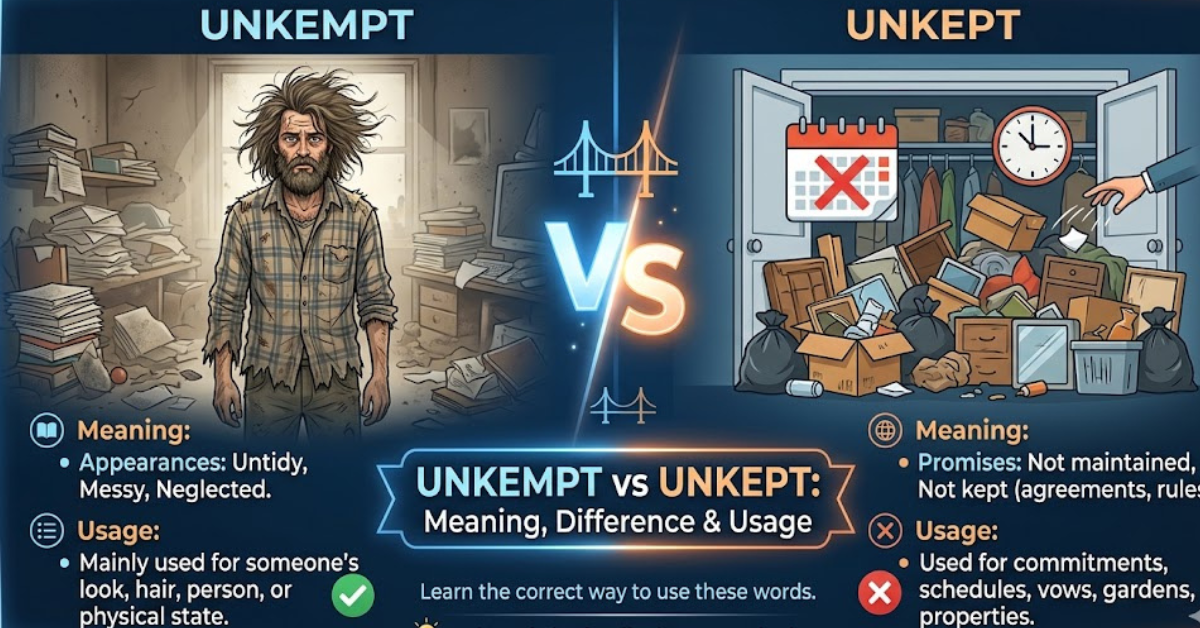
The confusion around unkempt vs unkept is more common than you might think. These two words look similar, sound slightly related, and are often used interchangeably—but only one is actually correct in modern English usage.
If you’ve ever paused while writing and wondered whether to say “unkept hair” or “unkempt hair,” you’re not alone. The keyword unkempt vs unkept comes up frequently in grammar searches because many people assume both words mean the same thing. However, their meanings, usage, and correctness differ significantly.
Let’s break it down in a simple, practical way so you never confuse them again.
What Does “Unkempt” Mean?
The word unkempt is the correct and widely accepted term in modern English.
Meaning of Unkempt
Unkempt refers to something that is:
- Messy or untidy in appearance
- Poorly maintained or disheveled
- Not groomed or organized
Examples of “Unkempt” in Sentences
- He arrived with unkempt hair and wrinkled clothes.
- The garden looked unkempt after weeks of neglect.
- Her appearance was casual but slightly unkempt.
What Does “Unkept” Mean?
Here’s where things get interesting in the unkempt vs unkept debate.
Is “Unkept” Correct?
Technically, unkept is a real word, but its usage is very limited and often considered outdated in modern writing.
Meaning of Unkept
Unkept usually means:
- Not maintained or not fulfilled (especially promises or rules)
Examples of “Unkept”
- He made unkept promises during the campaign.
- The agreement remained unkept by both parties.
However, when referring to appearance (hair, clothes, gardens), unkept is generally incorrect. That’s where unkempt should be used instead.
Unkempt vs Unkept: Key Differences
Understanding the difference between unkempt vs unkept becomes easy when you compare them side by side:
| Feature | Unkempt | Unkept |
| Correct usage | Yes (modern English) | Rare / limited usage |
| Meaning | Messy, untidy appearance | Not maintained or fulfilled |
| Common context | Hair, clothes, places | Promises, agreements |
| Popularity | Very common | Uncommon / outdated |
Why People Confuse Unkempt and Unkept
The confusion in unkempt vs unkept happens for a few simple reasons:
- They sound similar when spoken
- Both begin with “un-” (negative prefix)
- “Unkept” looks logically correct
- Older texts sometimes used “unkept” more freely
In reality, English evolved to prefer “unkempt” for appearance-related meaning.
Simple Usage Rule to Remember
To avoid confusion:
- Use unkempt → for appearance or condition
- Use unkept → only for promises, rules, or obligations (rare)
Quick Memory Trick:
If you can see it (hair, clothes, room), it’s “unkempt.”
If it’s about keeping a promise, it’s “unkept.”
Real-Life Examples for Clarity
Correct Usage (Unkempt)
- The actor played a homeless man with unkempt hair.
- The abandoned house looked unkempt and eerie.
Limited Usage (Unkept)
- The treaty remained unkept for years.
- Many of his promises went unkept.
FAQs: Unkempt vs Unkept
1. Is “unkempt” or “unkept” correct?
Unkempt is the correct and commonly used word for messy or untidy appearance.
2. Can I use “unkept hair”?
No. The correct phrase is “unkempt hair.”
3. What does “unkempt” mean in simple words?
It means messy, untidy, or not properly cared for.
4. Is “unkept” grammatically wrong?
Not exactly, but it is outdated and rarely used in modern English, especially for appearance.
5. Why do people say “unkept” instead of “unkempt”?
Because the words sound similar and “unkept” seems logically correct, even though it isn’t preferred in modern usage.
Conclusion
When comparing unkempt vs unkept, the clear winner in everyday English is unkempt. It is the correct term used to describe messy or untidy appearance, whether it’s hair, clothing, or surroundings.
On the other hand, unkept exists but is mostly limited to formal or outdated contexts involving promises or obligations.
If you want to write clearly and correctly, stick with unkempt for appearance-related descriptions—and you’ll avoid one of the most common grammar mistakes in English.
For more grammar clarity, keep exploring similar word confusions—you’ll be surprised how many exist in everyday writing.
Leave a Reply