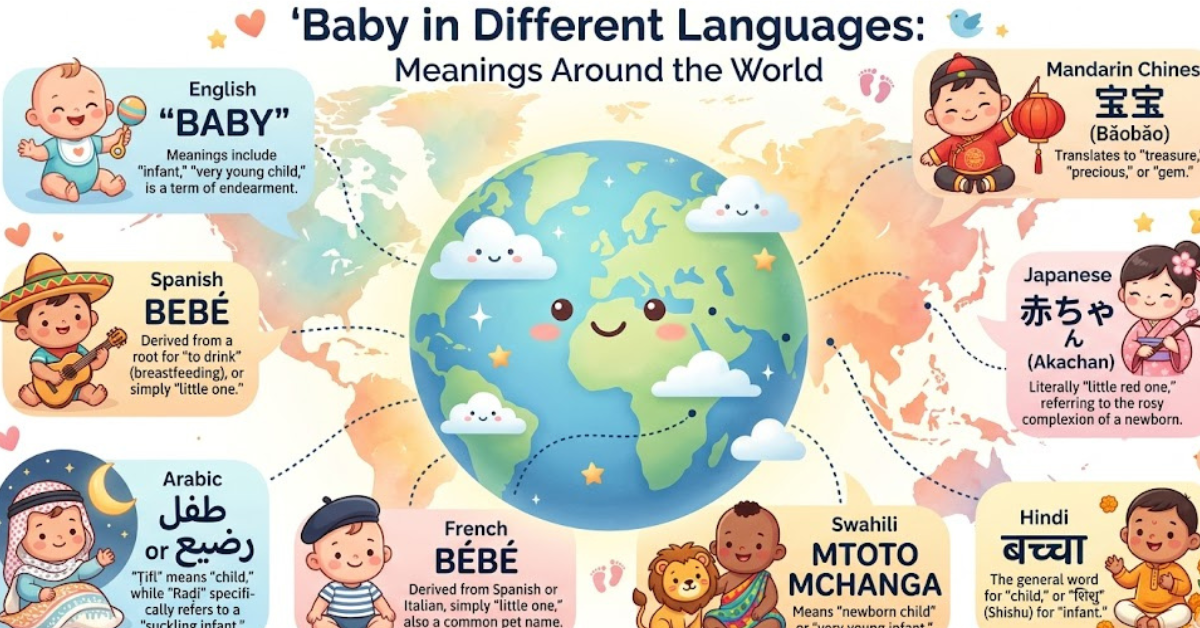
The phrase baby in different languages is more than just a translation exercise—it’s a glimpse into how cultures express love, affection, and care for infants. Across the world, the word “baby” carries emotional warmth, but the way it is spoken changes beautifully from language to language.
Whether you’re learning a new language, naming a character, or simply curious about global vocabulary, understanding how to say baby in different languages helps you connect with people on a more personal level.
Why Learn “Baby” in Different Languages?
Learning how to say baby in different languages is useful in many real-life situations. It can help travelers, language learners, parents, and even writers who want authentic cultural expressions.
Here’s why it matters:
- Builds emotional connection in conversations
- Useful for parenting and childcare communication
- Helps language learners expand vocabulary
- Adds authenticity in writing and storytelling
Baby in Different Languages: Common Translations
Below is a simple and helpful list of how to say baby in different languages around the world.
European Languages
- Spanish: bebé
- French: bébé
- German: Baby / Säugling
- Italian: bambino / bebè
- Portuguese: bebê
- Dutch: baby
- Russian: младенец (mladenets) / малыш (malysh)
Asian Languages
- Hindi: बच्चा (bachcha) / शिशु (shishu)
- Urdu: بچہ (bacha)
- Chinese (Mandarin): 婴儿 (yīng’ér)
- Japanese: 赤ちゃん (akachan)
- Korean: 아기 (agi)
- Thai: ทารก (tharok)
- Arabic (Middle East): طفل (tifl) / رضيع (radi‘)
African Languages
- Swahili: mtoto (child/baby)
- Yoruba: ọmọ
- Zulu: usana (infant)
Other Popular Variations
- Turkish: bebek
- Greek: μωρό (moró)
- Hebrew: תינוק (tinok)
- Indonesian: bayi
Cultural Meaning Behind “Baby in Different Languages”
The phrase baby in different languages doesn’t always translate literally. In many cultures, different words are used depending on age, affection, or context.
For example:
- In Japanese, “akachan” is a soft, affectionate term used mostly by family members.
- In Arabic, “tifl” is formal, while “habibi” (my love) is often used emotionally.
- In Spanish, “bebé” is commonly used across both formal and informal settings.
This shows how language reflects emotional closeness, not just vocabulary.
Pronunciation Tips for “Baby in Different Languages”
If you’re learning how to say baby in different languages, pronunciation is key.
Here are a few tips:
- Listen to native speakers on language apps
- Break words into syllables (e.g., be-bé in Spanish)
- Practice slowly before speaking naturally
- Focus on accent marks in Romance languages
How “Baby” is Used in Everyday Conversations
The word baby in different languages is often used in:
- Parenting conversations
- Love expressions between couples
- Talking about newborn care
- Nursery rhymes and songs
Example usage:
- English: “The baby is sleeping.”
- Spanish: “El bebé está durmiendo.”
- French: “Le bébé dort.”
FAQs About Baby in Different Languages
1. What is baby in the most spoken languages?
It includes “bébé” (French), “bebé” (Spanish), “bebe” (Portuguese), and “baby” (English/German).
2. Is the word “baby” universal?
Not exactly. While many languages use similar-sounding words, each language has its own native term.
3. What is baby in Urdu and Hindi?
In Urdu and Hindi, “baby” is commonly translated as bacha (بچہ) or shishu (शिशु).
4. Why do many languages use similar words for baby?
Because the English word “baby” influenced many modern languages, especially through media and globalization.
5. What is the most affectionate word for baby globally?
It depends on culture—words like akachan (Japanese), habibi (Arabic context), and bebé (Spanish) are often used affectionately.
Conclusion
Exploring baby in different languages reveals how deeply language and emotion are connected across cultures. While the words may change, the meaning stays universal—care, innocence, and love.
If you enjoy learning global vocabulary, try exploring more everyday words across languages. It’s a simple way to understand cultures and connect with people worldwide on a deeper level.
Leave a Reply