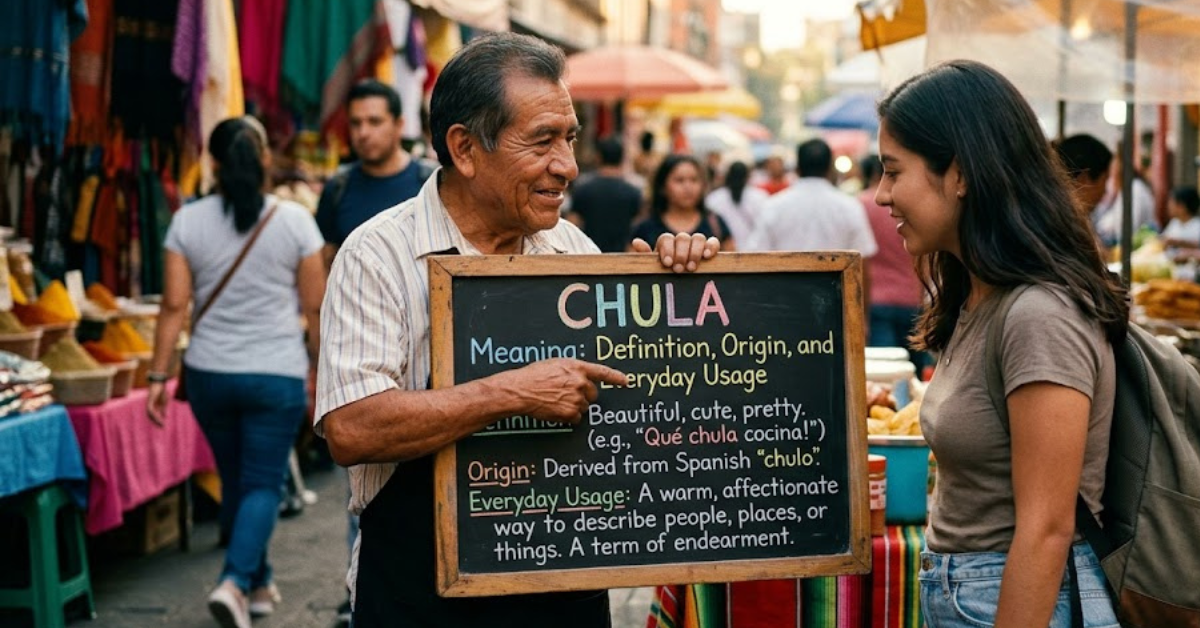
Have you ever heard someone say “¡Qué chula!” or call someone “chula” and wondered what they actually meant? At first glance, it seems like a simple Spanish word, but its meaning can vary depending on where it’s used and the context behind it.
Understanding the chula meaning is more than just learning a vocabulary word. It’s about exploring culture, regional expressions, and everyday conversations across the Spanish-speaking world. In this guide, you’ll discover what chula means, where it comes from, how native speakers use it, and when it’s appropriate to say it yourself.
What Does Chula Mean?
The most common chula meaning is:
- Pretty
- Cute
- Beautiful
- Lovely
- Charming
- Attractive
In many Spanish-speaking countries, chula is used as a compliment. It can describe a person’s appearance, an outfit, a pet, a house, or almost anything that looks appealing.
Examples
- ¡Qué niña tan chula!
What a cute little girl! - Tu vestido está muy chulo.
Your dress looks really nice. - Ese perro es muy chulo.
That dog is adorable.
The masculine version is chulo.
The Origin of the Word Chula
The word chula has roots in Spanish history. Linguists believe it became popular in Spain centuries ago and later spread throughout Latin America.
Historically, chulo has carried different meanings depending on the era and region. While today it’s often associated with beauty or attractiveness, older uses sometimes referred to someone who was stylish, bold, or even street-smart.
Over time, its meaning softened in many places, making it one of the most common compliments in everyday Spanish.
Chula vs. Chulo
Spanish adjectives change depending on gender.
| Word | Used For | Meaning |
| Chula | Feminine nouns | Pretty, cute, beautiful |
| Chulo | Masculine nouns | Handsome, cool, nice |
Examples:
- Ella es muy chula.
- Él es muy chulo.
- Esa casa está chula.
- Ese coche está chulo.
Chula Meaning in Different Spanish-Speaking Countries
One fascinating aspect of Spanish is that words often change meaning from one country to another.
Spain
In Spain, chulo/chula frequently means:
- Cool
- Nice
- Great
- Stylish
Example:
“¡Qué móvil más chulo!”
Translation:
“What a cool phone!”
It usually has a positive meaning.
However, when describing a person, chulo can sometimes mean:
- Arrogant
- Cocky
- Overconfident
Context determines the intended meaning.
Mexico
In Mexico, chula is almost always affectionate.
It commonly means:
- Beautiful
- Cute
- Gorgeous
- Sweet
You’ll often hear expressions like:
- Mi chula
- Hola, chula
- Qué chula estás
These are friendly compliments.
Argentina
Although Argentinians use many local expressions instead, they still understand chula through media and interactions with other Spanish-speaking communities.
The word is less common than in Spain or Mexico.
Puerto Rico
In Puerto Rico, chula often expresses admiration or affection.
Examples include:
- Hola, chula.
- Esa bebé está bien chula.
Other Latin American Countries
Across countries like Colombia, Guatemala, Honduras, El Salvador, and Nicaragua, the meaning generally stays positive:
- Attractive
- Cute
- Pretty
- Lovely
Still, local slang varies, so listening to native speakers helps you understand regional nuances.
Is Chula a Compliment?
Yes—in most situations.
Calling someone chula is generally considered a compliment.
People commonly use it for:
- Friends
- Family members
- Children
- Romantic partners
- Pets
Examples:
- Mi niña chula.
- Hola, chula.
- Qué chula te ves hoy.
The tone is usually warm, affectionate, and friendly.
When Can Chula Have a Negative Meaning?
Although uncommon, context matters.
In some parts of Spain, calling someone chulo can suggest they are:
- Conceited
- Arrogant
- Showy
- Full of themselves
For example:
“Es muy chulo.”
Depending on the speaker’s tone, this could mean:
“He’s really cocky.”
That’s why understanding regional usage is important.
Common Expressions Using Chula
Here are some everyday phrases.
Mi chula
A loving nickname meaning:
- My beautiful
- My sweetheart
- My dear
Hola, chula
A casual greeting similar to:
- Hey, beautiful!
- Hi, gorgeous!
Usually used among friends, partners, or family.
Qué chulo
In Spain, this often means:
- That’s awesome!
- That’s cool!
- That’s really nice!
Qué chula
Means:
- How pretty!
- How beautiful!
- How cute!
Chula in Popular Culture
The word appears frequently in:
- Spanish music
- Latin pop songs
- Movies
- TV shows
- Social media
- TikTok captions
- Instagram posts
You’ll often see captions like:
- Mi chula
- Qué chulo quedó.
- Hola, chula.
Its popularity has made it recognizable even among people who are just beginning to learn Spanish.
How to Pronounce Chula
The pronunciation is straightforward.
Phonetic pronunciation:
CHOO-lah
IPA:
/ˈtʃu.la/
The “ch” sounds like the “ch” in “chair,” while the “u” sounds similar to the “oo” in “food.”
Similar Spanish Words
If you’re expanding your Spanish vocabulary, these words have related meanings:
| Spanish Word | English Meaning |
| Bonita | Pretty |
| Hermosa | Beautiful |
| Linda | Lovely |
| Bella | Beautiful |
| Guapa | Good-looking |
| Preciosa | Gorgeous |
| Encantadora | Charming |
Each has its own nuance, but they all express admiration.
Practical Tips for Using Chula Correctly
If you’re learning Spanish, keep these tips in mind:
- Use chula as a compliment in casual conversations.
- Pay attention to the country and local slang.
- Match the adjective to the noun’s gender.
- Avoid assuming every region uses it the same way.
- Listen to native speakers to understand tone and context.
These habits will help you sound more natural and avoid misunderstandings.
Common Mistakes to Avoid
Many learners make these errors:
Assuming it means the same everywhere
Regional Spanish varies significantly.
Ignoring context
Tone of voice can completely change the meaning.
Using the wrong gender
Remember:
- Chula = feminine
- Chulo = masculine
Confusing it with other compliments
While similar to bonita or hermosa, chula often feels more casual and conversational.
Why Understanding Chula Matters
Learning words like chula goes beyond vocabulary.
It helps you:
- Understand native conversations.
- Appreciate cultural differences.
- Use compliments naturally.
- Build confidence when speaking Spanish.
- Connect more authentically with Spanish speakers.
Language is deeply tied to culture, and small words often carry rich social meaning.
Key Takeaways
- Chula generally means pretty, cute, beautiful, or lovely.
- The masculine form is chulo.
- Meanings vary by country and context.
- In Spain, chulo can also describe someone who is cocky or arrogant.
- The word is widely used as an affectionate compliment in Latin America.
- Context and tone are essential for understanding its intended meaning.
Frequently Asked Questions
What is the exact chula meaning in English?
The most common English translations include pretty, cute, beautiful, lovely, and attractive. The exact meaning depends on the situation and the country where it’s is used.
Is calling someone chula flirting?
Not necessarily. While romantic partners may use it affectionately, friends and family also say chula as a warm compliment. The relationship and tone determine whether it feels flirtatious.
Does chula mean beautiful?
Yes. In many Spanish-speaking regions, chula can mean beautiful, especially when describing a person’s appearance, clothing, or something visually appealing.
Is chulo a bad word?
Usually no. In many places it means cool, nice, or attractive. However, in parts of Spain, calling someone chulo can imply they are arrogant or overly confident.
Can men be called chula?
No. In standard Spanish, chula is feminine. Men are typically described as chulo, since Spanish adjectives agree with the gender of the noun.
Is chula commonly used today?
Absolutely. It’s widely used in everyday conversations, social media, music, television, and texting throughout many Spanish-speaking communities.
Conclusion
The chula meaning extends far beyond a simple translation. While it usually describes someone or something as pretty, cute, or attractive, its exact meaning depends on the country, context, and tone of the conversation. Understanding these cultural nuances allows you to communicate more naturally and appreciate the richness of the Spanish language.
Whether you’re learning Spanish, traveling, or simply curious about everyday expressions, knowing how and when to use chula will help you engage with native speakers more confidently. Keep exploring common phrases and regional vocabulary to deepen your understanding and make your conversations feel even more authentic.
Leave a Reply