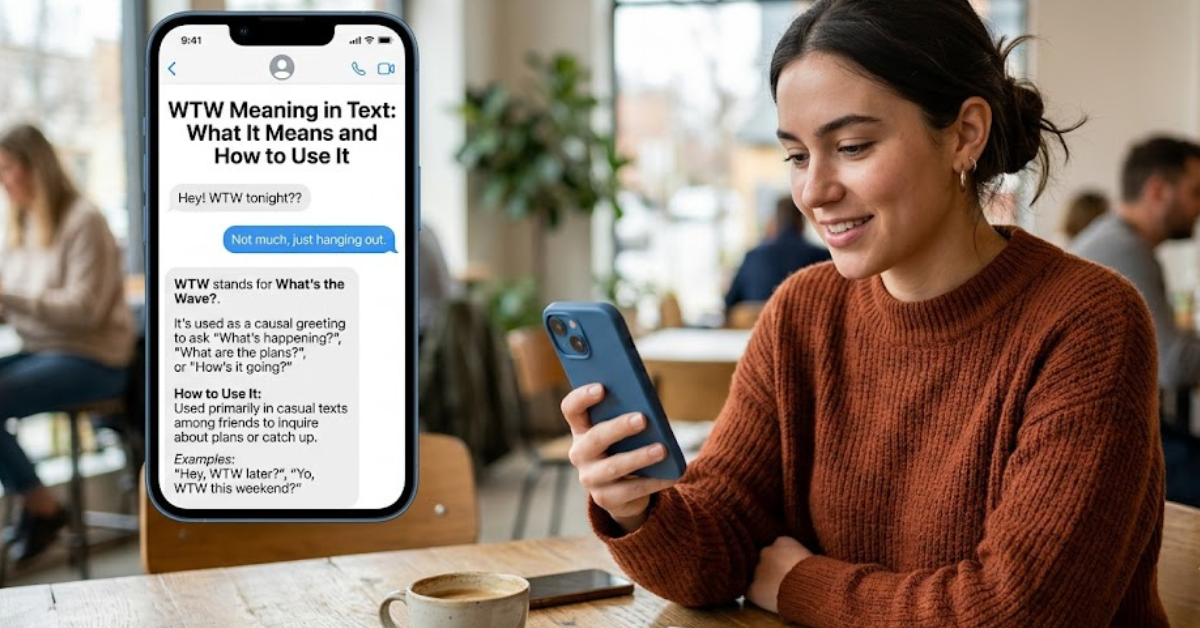
Have you ever received a message that simply says “WTW?” and wondered what the sender was trying to say? You’re not alone. Text messaging is filled with abbreviations that can be confusing, especially if you’re not familiar with modern internet slang.
Understanding the wtw meaning in text helps you respond confidently in conversations on Snapchat, Instagram, WhatsApp, TikTok, and regular SMS. In this guide, you’ll learn what WTW stands for, when people use it, how to reply naturally, and the different meanings it can have depending on the conversation.
What Does WTW Mean in Text?
The most common meaning of WTW is:
“What’s the Word?”
In everyday texting, this is another way of asking:
- What’s up?
- What’s going on?
- What’s the plan?
- What are you doing?
- What’s happening?
It’s a casual greeting people use to start conversations or check if someone is available.
Example
Alex: WTW?
Jordan: Nothing much. Just watching Netflix.
Here, WTW simply means “What’s up?”
Where Did WTW Come From?
WTW originated from urban slang, particularly in American English, before becoming popular across social media platforms and messaging apps. As texting culture evolved, people shortened common phrases to type faster.
Today, WTW is widely used among teenagers, college students, and young adults, although people of all ages may encounter it online.
The abbreviation became especially popular through:
- Snapchat
- Instagram DMs
- TikTok comments
- Discord
- Facebook Messenger
- X (formerly Twitter)
Different Meanings of WTW Depending on Context
Although “What’s the Word?” is the most common interpretation, WTW can mean different things depending on the conversation.
1. What’s Up?
This is by far the most common use.
Example:
Friend: WTW?
You: Just got home from work.
2. What’s the Plan?
Sometimes someone wants to know what everyone is doing later.
Example:
Friend: WTW tonight?
You: Thinking about grabbing dinner around 7.
3. Are You Free?
WTW can also be a way of checking someone’s availability.
Example:
WTW this weekend?
The sender is asking whether you’re busy or free to meet.
4. Start a Conversation
Sometimes WTW doesn’t ask anything specific. It’s simply a conversation starter.
Example:
WTW?
Long time no talk.
WTW Meaning on Snapchat
On Snapchat, WTW almost always means:
- What’s up?
- What are you doing?
- Want to hang out?
Since Snapchat encourages quick, casual conversations, users often send WTW to several friends to see who’s available.
Example:
Snap: WTW?
Reply: Just finished class. You?
WTW Meaning on Instagram
Instagram users commonly send WTW in direct messages to:
- Check in
- Start chatting
- Ask someone to hang out
- Continue a conversation
Example:
WTW today?
It simply means, “What’s going on today?”
WTW Meaning on TikTok
On TikTok, WTW usually appears:
- In comments
- In captions
- During live streams
- In direct messages
Depending on context, it may mean:
- What’s happening?
- What’s everyone doing?
- What’s the news?
- What’s the vibe?
Example:
WTW in the comments tonight?
This encourages people to interact.
WTW Meaning in Text Messages
In ordinary SMS conversations, WTW generally means one of these:
- What’s up?
- What’s new?
- What’s the plan?
- How are you doing?
Because texting lacks tone of voice, the surrounding conversation helps determine the exact meaning.
How to Respond to WTW
There’s no single correct answer. Your response depends on what you’re doing.
Here are some natural replies.
If Nothing Is Happening
- Not much. You?
- Just relaxing.
- Chilling at home.
- Nothing special.
If You’re Busy
- Working right now.
- Studying for tomorrow.
- Running errands.
- At the gym.
If You’re Free
- Nothing. What’s up?
- I’m free.
- Wanna hang out?
- What did you have in mind?
If You’re Making Plans
- Thinking about getting food.
- Heading downtown later.
- Watching the game tonight.
- Want to join?
Examples of WTW in Conversations
Example 1
Emma: WTW?
Sophia: Just got off work.
Example 2
Jake: WTW tonight?
Ryan: Movie around 8 if you’re interested.
Example 3
Chris: WTW bro?
Mark: Just gaming. You?
Example 4
Taylor: WTW this weekend?
Sam: Probably visiting family.
When Should You Use WTW?
WTW works best in casual conversations.
Good situations include:
- Messaging close friends
- Checking on someone
- Starting a conversation
- Asking about weekend plans
- Seeing if someone wants to meet
It’s quick, friendly, and informal.
When You Should Avoid Using WTW
WTW isn’t appropriate in every situation.
Avoid using it in:
- Job interviews
- Professional emails
- Business meetings
- Academic assignments
- Formal customer communication
Instead, use complete phrases like:
- How are you?
- What are your plans?
- Are you available?
- How have you been?
Other Popular Text Abbreviations Similar to WTW
Learning related abbreviations makes texting easier.
| Abbreviation | Meaning |
| WYD | What are you doing? |
| WSG | What’s good? |
| WSP | What’s up? |
| HBU | How about you? |
| TBH | To be honest |
| IMO | In my opinion |
| IDK | I don’t know |
| BRB | Be right back |
| LOL | Laughing out loud |
| SMH | Shaking my head |
These abbreviations are commonly used across social media and messaging apps.
Why Has WTW Become So Popular?
Several reasons explain its popularity.
Faster Communication
Typing three letters is much quicker than writing an entire sentence.
Social Media Culture
Apps encourage quick, informal conversations.
Easy Conversation Starter
WTW immediately opens the door for chatting without feeling awkward.
Universal Meaning
Most younger internet users understand it instantly.
Common Misunderstandings About WTW
Some people assume WTW always has one meaning, but context matters.
For example:
WTW tonight?
This asks about plans.
WTW?
This usually means “What’s up?”
WTW with that game?
Here it means “What’s going on with that game?”
Reading the rest of the conversation helps determine the intended meaning.
Tips for Using WTW Naturally
If you’re new to texting slang, keep these tips in mind:
- Use it only in casual conversations.
- Consider the relationship you have with the other person.
- Read the conversation for context.
- Respond naturally instead of overthinking.
- Don’t use internet slang in professional communication.
Key Takeaways
- WTW usually stands for “What’s the Word?”
- It commonly means “What’s up?” or “What’s going on?”
- The abbreviation is popular on Snapchat, Instagram, TikTok, WhatsApp, and text messages.
- Context determines whether it refers to plans, availability, or simply starting a conversation.
- It’s best used in informal chats with friends and family.
Frequently Asked Questions
What is the WTW meaning in text?
The most common wtw meaning in text is “What’s the Word?” It’s an informal way of asking someone what’s happening, what they’re doing, or whether they have any plans.
Does WTW mean “What’s up”?
Yes. In most conversations, WTW is simply another way of saying “What’s up?” or “What’s going on?” The two expressions are often interchangeable.
What does WTW mean on Snapchat?
On Snapchat, WTW usually means “What’s up?” or “What are you doing?” People often use it to start conversations or see if friends are available to hang out.
How should I reply to WTW?
Reply naturally based on what you’re doing. You might say “Not much,” “Just working,” “I’m free,” or “What about you?” depending on the situation.
Is WTW considered slang?
Yes. WTW is internet slang and texting shorthand. It’s commonly used in casual conversations but isn’t appropriate for formal or professional communication.
Can WTW have different meanings?
Yes. While “What’s the Word?” is the most common definition, WTW can also refer to “What’s the plan?” or “What’s happening?” depending on the context of the conversation.
Conclusion
Now that you know the wtw meaning in text, you’ll have no trouble understanding or using this popular abbreviation in everyday conversations. In most cases, it’s simply a friendly way of asking what’s happening, what someone is doing, or whether they have plans.
Like many texting abbreviations, WTW depends on context, but once you recognize how it’s used, responding becomes second nature. Whether you’re chatting on Snapchat, Instagram, WhatsApp, or through regular text messages, understanding common internet slang makes conversations smoother and more enjoyable. Keep learning these modern expressions, and you’ll feel more confident navigating today’s digital communication.
Leave a Reply