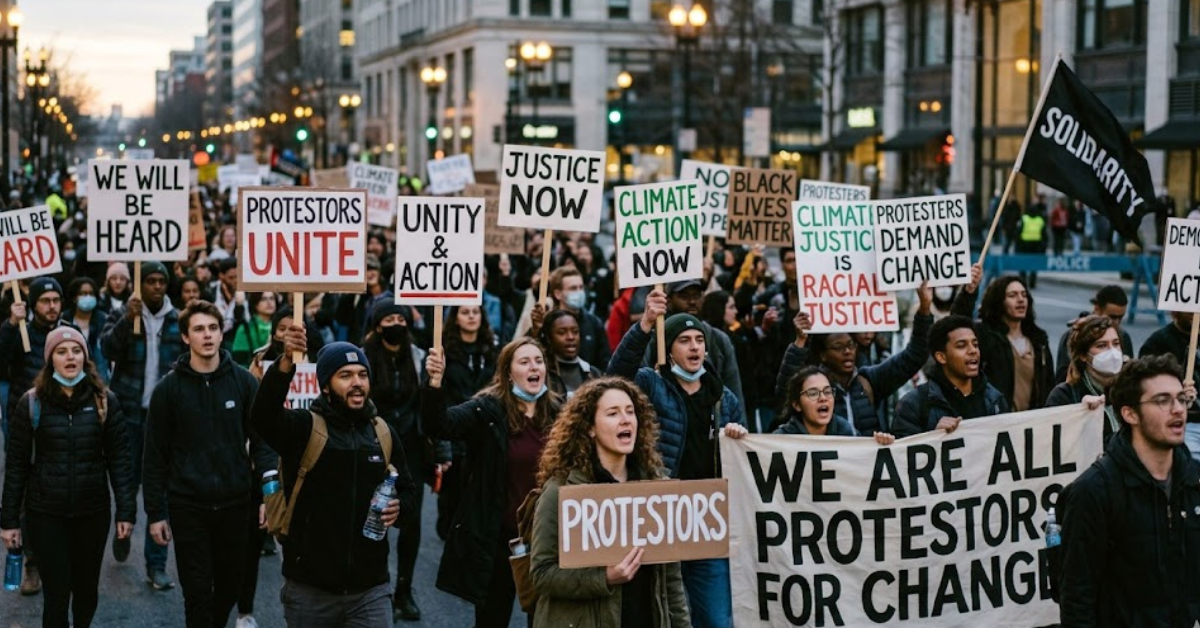
Language has a funny way of creating confusion, especially when two words look almost identical and seem to mean the same thing. One common example is “protestors or protesters.” If you’ve ever paused while writing an article, social media post, essay, or news report wondering which spelling is correct, you’re definitely not alone.
The good news is that both words are real and both relate to people who protest. However, one version is considered far more standard in modern English. In this article, we’ll break down the meaning of protestors or protesters, explain the grammatical difference, show real-world examples, and help you understand which term sounds more natural in professional writing.
What Do “Protestors” and “Protesters” Mean?
Both protestors and protesters refer to people who publicly express opposition to something, usually through demonstrations, marches, rallies, or organized movements.
Simple Definition
A protester or protestor is:
- A person who protests against policies, laws, decisions, or social issues
- Someone participating in a demonstration or public objection
- An individual expressing disagreement or resistance
Example Sentences
- Thousands of protesters gathered outside the city hall.
- Environmental protestors demanded stricter climate laws.
Even though both sentences are understandable, one spelling is generally preferred.
Protestors or Protesters: Which Is Correct?
“Protesters” Is the Preferred and Standard Form
In modern English, especially American and British English, “protesters” is considered the standard and more widely accepted spelling.
Why?
The word comes from the verb “protest.” In English, many nouns describing people are formed by adding -er to a verb.
Examples include:
- Teach → Teacher
- Work → Worker
- Drive → Driver
- Protest → Protester
Because of this common grammatical pattern, protester feels more natural and is used more frequently in journalism, academic writing, and everyday conversation.
Is “Protestor” Wrong?
Not exactly. “Protestor” is still recognized as a valid word in many dictionaries. However, it is much less common.
Some style guides and editors consider it a nonstandard variant. Others accept it but recommend using “protester” for consistency and clarity.
Quick Comparison
| Word | Status | Common Usage |
| Protester | Standard and preferred | Very common |
| Protestor | Alternative spelling | Less common |
If you’re writing professionally, academically, or for SEO purposes, “protesters” is usually the safer choice.
Why Do People Confuse Protestors and Protesters?
The confusion comes from English word formation. Some English nouns end in -or, while others end in -er.
For example:
Words Ending in -or
- Actor
- Creator
- Doctor
Words Ending in -er
- Writer
- Singer
- Builder
Since both endings exist in English, many people assume either spelling works equally well. Technically, they can—but usage frequency matters.
Search engines, newspapers, and grammar experts overwhelmingly favor “protesters.”
Historical Usage of Protestors vs Protesters
Interestingly, both spellings have existed for a long time. Older publications occasionally used “protestor,” especially in legal or formal contexts.
However, modern language trends shifted toward “protester.” Major news organizations such as:
- BBC
- CNN
- The New York Times
- Reuters
almost always use “protesters.”
This widespread usage has helped make it the dominant form today.
Protesters Meaning in Different Contexts
The term protesters can apply to many different situations, not just political demonstrations.
Political Protesters
People protesting government decisions, elections, or laws.
Example
- Protesters marched against tax reforms.
Social Justice Protesters
Groups advocating for equality, human rights, or social change.
Example
- Civil rights protesters gathered peacefully downtown.
Environmental Protesters
Activists raising awareness about climate change or pollution.
Example
- Environmental protesters blocked traffic during the rally.
Student Protester
Students objecting to school policies or educational reforms.
Example
- Student protesters demanded lower tuition fees.
Grammar Rules Behind “Protester”
Understanding the grammar can make the difference easier to remember.
The Suffix “-er”
The suffix -er commonly means:
“A person who performs an action.”
Examples:
- Run → Runner
- Teach → Teacher
- Protest → Protester
This is why English speakers naturally prefer protester over protestor.
Is “Protestor” Used Anywhere?
Yes, but much less frequently.
You may still see protestor in:
- Older books
- Regional writing styles
- User-generated content online
- Informal blogs or forums
Still, if your goal is polished, professional English, stick with protester.
Common Mistakes People Make
1. Assuming “Protestor” Is More Formal
Some people think words ending in -or sound more professional. That’s not always true.
In this case, protester is actually the standard form.
2. Mixing Both Spellings in One Article
Consistency matters.
Choose one spelling and stick with it throughout your writing. Most editors recommend using protester consistently.
3. Confusing “Protest” as a Noun and Verb
Remember:
- Protest = action or objection
- Protester = person protesting
How Dictionaries Define Protesters and Protestors
Most major dictionaries list both words, but they prioritize protester.
Merriam-Webster
Lists both spellings, with protester being more common.
Cambridge Dictionary
Primarily uses protester.
Oxford English Dictionary
Recognizes both but favors protester in examples and modern usage.
Tips to Remember the Correct Spelling
Here are a few easy tricks:
Think of Similar Words
- Teach → Teacher
- Drive → Driver
- Protest → Protester
Use What News Outlets Use
Professional journalists almost always write protesters.
Keep It Simple
If unsure, choose protester.
FAQs About Protestors or Protesters
Is it protesters or protestors?
Both are technically correct, but protesters is the preferred and more commonly used spelling in modern English.
What does protesters mean?
Protesters are people who publicly express opposition or disagreement, often through demonstrations or rallies.
Is protestor grammatically correct?
Yes, protestor is grammatically recognized, but it is considered less standard than protester.
Which spelling is more common in newspapers?
Most newspapers and media outlets use protesters almost exclusively.
Should I use protestor or protester in academic writing?
Use protester in academic, professional, and formal writing for clarity and consistency.
Why do both spellings exist?
English has words ending in both -er and -or, which is why alternative spellings sometimes develop over time.
Conclusion
When comparing protestors or protesters, the key takeaway is simple: both words exist, but “protesters” is the standard, preferred, and more widely accepted spelling in modern English.
Whether you’re writing a news article, blog post, essay, or social media caption, using protester will sound more natural and professional to most readers. While protestor isn’t technically wrong, it appears far less often and may look unusual in formal writing.
Understanding these subtle language differences can improve your grammar, writing confidence, and overall communication skills. If you enjoy exploring confusing English words and grammar rules, consider checking out more language guides and writing tips to sharpen your vocabulary even further.
Leave a Reply