Have you ever looked at a piece of glowing amber and mistaken it for gold—or wondered why both are so highly valued despite being completely different in nature? The comparison of gold vs amber often comes up in jewelry, collectibles, and even investment conversations, but the truth is they belong to entirely different worlds.
In this guide on gold vs amber, you’ll learn what each material really is, how they form, why they’re valued, and how to tell them apart. We’ll also explore their uses in jewelry, cultural symbolism, durability, and market value so you can clearly understand what makes each one unique.
What Is Gold? A Precious Metal Built for Value
Gold is a naturally occurring precious metal known for its rarity, luster, and resistance to corrosion. It has been used for thousands of years as currency, jewelry, and a store of wealth.
Key characteristics of gold:
- Chemical element (Au) found in nature
- Extremely malleable and ductile
- Does not rust or tarnish
- Measured in karats (24K = pure gold)
In the discussion of gold vs amber, gold stands out as a financial asset as much as a decorative material. It is globally traded and considered a hedge against inflation.
What Is Amber? Fossilized Natural Resin
Amber is not a metal or mineral—it is fossilized tree resin that has hardened over millions of years. Often golden to honey-brown in color, it is prized for its warm glow and occasional preserved inclusions like insects or plant matter.
Key characteristics of amber:
- Organic origin (tree resin, not mineral)
- Lightweight and warm to the touch
- Ranges in color from yellow to deep orange-brown
- Often contains ancient biological inclusions
When comparing gold vs amber, amber is valued more for its beauty, rarity in quality pieces, and historical significance than for financial investment.
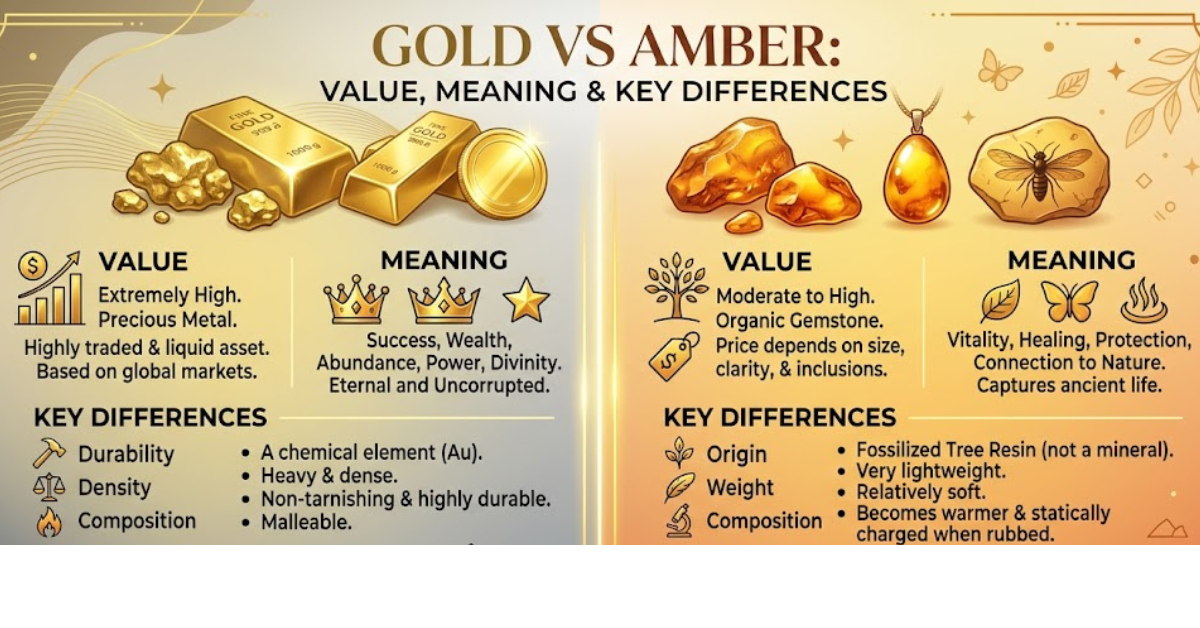
Gold vs Amber: Key Differences Explained
Understanding gold vs amber becomes easier when you break it down by core properties.
1. Origin
- Gold: Metallic element formed in Earth’s crust
- Amber: Fossilized tree resin from ancient forests
2. Durability
- Gold: Extremely durable, does not degrade
- Amber: Softer and more prone to scratching (Mohs scale ~2–2.5)
3. Value
- Gold: High monetary and investment value
- Amber: Value depends on clarity, color, and inclusions
4. Weight
- Gold: Very dense and heavy
- Amber: Lightweight and easy to wear
5. Uses
- Gold: Jewelry, bullion, electronics, currency reserves
- Amber: Jewelry, decorative pieces, collectibles
These differences highlight why gold vs amber is not a comparison of equals but of two entirely different categories of natural materials.
Jewelry Appeal: Why Both Are Loved
Both materials are widely used in jewelry, but for different reasons.
Gold in jewelry:
Gold is associated with luxury, wealth, and long-term value. It is commonly used in:
- Engagement rings
- Necklaces and chains
- Investment-grade bullion jewelry
Amber in jewelry:
Amber is valued for its natural beauty and organic warmth. It is often used in:
- Beaded necklaces
- Bohemian-style jewelry
- Vintage or cultural pieces
In the gold vs amber debate, gold appeals to investment-focused buyers, while amber attracts those who appreciate nature-inspired aesthetics.
Symbolism and Cultural Meaning
Gold symbolism:
- Wealth and prosperity
- Power and status
- Purity and eternity
Amber symbolism:
- Healing and protection (traditional beliefs)
- Connection to nature and ancient life
- Warmth and emotional balance
Across cultures, gold vs amber reflects a contrast between material wealth and natural history.
Investment Perspective: Which Holds More Value?
From a financial standpoint, gold is a globally recognized investment asset. It is traded on commodity markets and retains long-term stability.
Amber, while valuable in rare cases (especially Baltic amber with inclusions), does not function as a standardized investment asset.
So in gold vs amber, gold clearly dominates in:
- Liquidity
- Market demand
- Price stabilityAmber’s value is more niche and collector-driven.
How to Identify Real Gold and Amber
Identifying gold:
- Hallmark stamps (e.g., 18K, 24K)
- Does not tarnish or discolor
- High density (feels heavy)
Identifying amber:
- Lightweight and warm
- Can produce a static charge when rubbed
- May float in saltwater (in some cases)
Knowing these differences helps avoid confusion in gold vs amber comparisons when shopping for jewelry.
Key Takeaways
- Gold is a precious metal; amber is fossilized resin
- Gold holds strong investment value; amber is mainly decorative
- Both are used in jewelry but serve different purposes
- Their origins, durability, and value systems are completely different
Frequently Asked Questions (FAQs)
1. What is the main difference in gold vs amber?
Gold is a metallic element used for investment and jewelry, while amber is fossilized tree resin valued mainly for its beauty and uniqueness.
2. Is amber more valuable than gold?
Generally, no. Gold has significantly higher and more stable market value compared to amber.
3. Can amber be used as an investment like gold?
Not in the same way. Amber value depends on rarity and collector demand, not global financial markets.
4. How can I tell gold vs amber apart?
Gold is heavy, shiny, and marked with karats, while amber is lightweight, warm, and often translucent.
5. Why is amber considered special in jewelry?
Amber often contains ancient inclusions like insects or plants, making each piece unique and historically fascinating.
6. Does gold vs amber have any similarity?
The only similarity is their use in jewelry and decorative arts; otherwise, they differ completely in composition and value.
Conclusion
The comparison of gold vs amber reveals two very different worlds—one rooted in financial value and global trade, the other in natural history and organic beauty. Gold remains a symbol of wealth and stability, while amber captures the quiet wonder of ancient life preserved in resin.
Whether you’re choosing jewelry, collecting natural pieces, or simply exploring materials, understanding their differences helps you appreciate both more deeply.
Leave a Reply