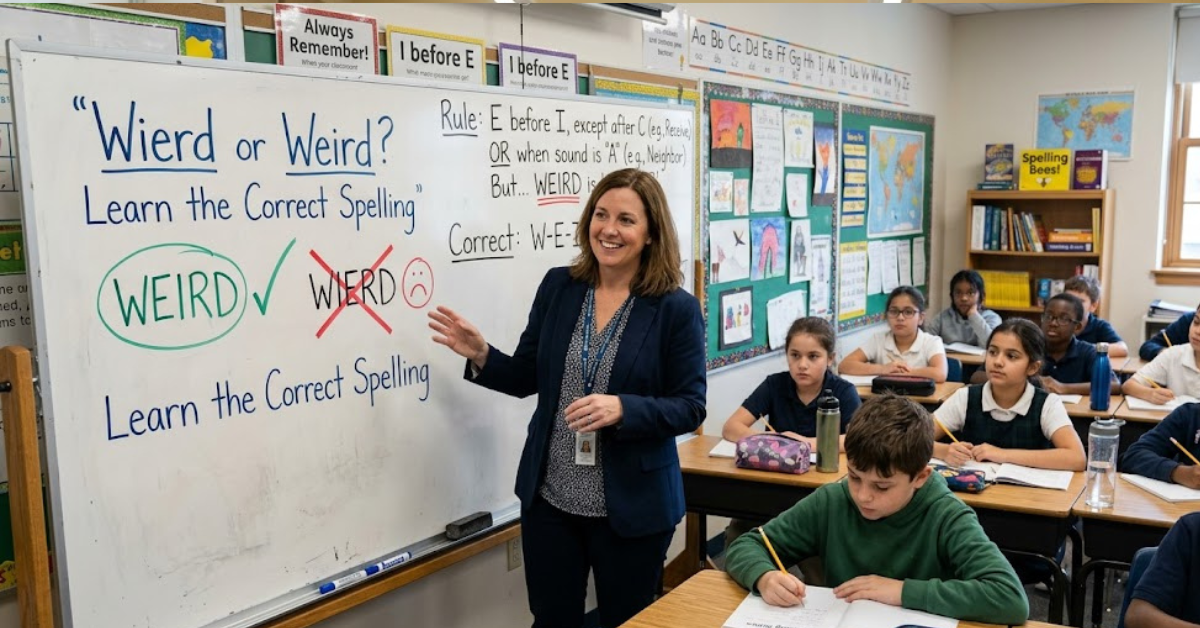
pause while typing it because both versions seem believable at first glance. If you have ever wondered, “is it wierd or weird?” you are definitely not alone.
The correct spelling is weird. The spelling “wierd” is incorrect and considered a common misspelling in standard English.
This article explains the difference, why the mistake happens so often, how to remember the correct version, and when to use the word naturally in everyday writing.
Is It Wierd or Weird?
The answer is simple: weird is the correct spelling.
People often write “wierd” because English spelling rules can feel inconsistent. However, dictionaries, grammar guides, schools, and professional writing standards all recognize only one correct form:
- Correct: weird
- Incorrect: wierd
So if you are asking, “is the correct spelling wierd or weird?” the right choice is always weird.
What Does Weird Mean?
The word “weird” describes something unusual, strange, unexpected, or difficult to explain.
It can refer to:
- Odd behavior
- Strange situations
- Uncommon experiences
- Unusual appearances
- Mysterious feelings
Examples of Weird in Sentences
- That movie had a really weird ending.
- I heard a weird noise outside last night.
- Her sense of humor is weird but funny.
- It feels weird seeing snow in April.
In casual conversation, the word is extremely common and usually carries a light or playful tone.
Wierd or Weird Meaning Explained
There is no separate meaning for “wierd” because it is not an accepted English word. Whenever someone writes “wierd,” they almost always mean “weird.”
That is why searches like:
- “wierd or weird meaning”
- “wierd or weird difference”
- “is it spelled wierd or weird”
are so common online. People recognize the confusion but want confirmation about the proper form.
Why Do People Misspell Weird?
The mistake usually happens because many English learners remember the rule:
“I before E except after C.”
But “weird” is one of the famous exceptions.
Instead of “ie,” the correct spelling uses “ei”:
- w + ei + rd = weird
English contains many exceptions to spelling patterns, which is why this word tricks even native speakers.
Easy Trick to Remember the Correct Spelling
A simple memory trick can help.
Think of this phrase:
“Weird things are rare, so the spelling is rare too.”
Because the word itself is unusual, its spelling breaks the common pattern.
Another helpful reminder:
- “Weird” starts like “we.”
- The “e” comes before the “i.”
Weird Pronunciation
The word is pronounced:
/weerd/
It sounds like:
- beard → different spelling
- feared → similar vowel sound
Even though pronunciation may suggest “ie,” the actual spelling remains “ei.”
Common Situations Where People Use Weird
The word appears in both casual and professional communication. Depending on context, it can sound humorous, critical, awkward, or descriptive.
Informal Use
Friends often use “weird” playfully:
- “That’s weird.”
- “You’re weird.”
- “What a weird coincidence.”
Emotional Situations
People also use it to describe uncomfortable feelings:
- “It feels weird talking after so long.”
- “The silence became weird.”
Pop Culture and Internet Use
Online conversations frequently include the word when reacting to:
- Strange trends
- Unexpected news
- Viral videos
- Odd behavior
Weird Synonyms
If you want variety in your writing, these words can work as alternatives depending on context:
- Strange
- Odd
- Unusual
- Bizarre
- Peculiar
- Eccentric
- Curious
- Abnormal
- Quirky
Each synonym carries a slightly different tone, so choose carefully.
Weird in Formal and Informal Writing
“Weird” is acceptable in most everyday writing, but in highly formal situations, a more precise word may sound better.
Casual Writing
Perfectly natural:
- text messages
- blogs
- conversations
- social media
Formal Writing
You may prefer:
- unusual
- unconventional
- atypical
- irregular
For example:
- Informal: “The results were weird.”
- Formal: “The results were unusual.”
Common Grammar Mistakes With Weird
Here are a few mistakes people make besides spelling.
Incorrect Capitalization
- Wrong: Weird happened yesterday.
- Correct: Something weird happened yesterday.
Confusing Tone
Calling someone “weird” can sound playful or insulting depending on tone and context.
Spelling Variations
Incorrect forms include:
- wierd
- wiered
- weard
Only “weird” is correct.
Is Weird an Adjective?
Yes, “weird” is an adjective because it describes nouns.
Examples:
- weird sound
- weird dream
- weird person
It can also appear after linking verbs:
- That seems weird.
- This feels weird.
History of the Word Weird
Interestingly, the word originally had a very different meaning.
“Weird” comes from an Old English word related to fate or destiny. Over time, its meaning evolved into something mysterious or strange.
In older literature, especially fantasy stories, the word sometimes carries a magical or supernatural feeling.
Why “Weird” Is One of the Most Misspelled Words
Several factors make this word difficult:
- It breaks a familiar spelling rule.
- The pronunciation is misleading.
- The “ei” pattern feels visually unusual.
- People type quickly and rely on sound instead of memory.
Because of this, searches like “wierd or weird spelling” remain extremely popular.
Quick Recap: Wierd or Weird?
Here is the simple answer:
- Weird = correct spelling
- Wierd = incorrect spelling
Whenever you write the word, remember that the “e” comes before the “i.”
FAQs
Is it wierd or weird?
The correct spelling is “weird.” “Wierd” is a misspelling.
Is the correct spelling wierd or weird?
The accepted English spelling is “weird.”
Why do people spell weird incorrectly?
People often follow the “I before E” spelling rule, but “weird” is an exception.
Is weird a bad word?
Not necessarily. It can be playful, descriptive, affectionate, or insulting depending on context and tone.
Can weird be used professionally?
Yes, but in formal writing, words like “unusual” or “atypical” may sound more polished.
What part of speech is weird?
“Weird” is an adjective.
How do you remember the spelling of weird?
Remember that the word is unusual, and its spelling is unusual too: “ei” instead of “ie.”
Conclusion
The debate around “wierd or weird” is easy to settle once you know the rule. The only correct spelling is weird, while “wierd” is simply a common mistake caused by confusing English spelling patterns.
Understanding the correct form helps improve your writing, avoid embarrassing errors, and communicate more confidently in both casual and professional settings. The next time you hesitate while typing the word, just remember: in “weird,” the “e” comes before the “i.”
Leave a Reply